

What Goes Into Every Devilson Jacket — No Marketing Language, Just Leather
When you spend £150 to £400 on a leather jacket, you deserve to know exactly what you’re buying. Most brands don’t explain this. They use phrases like “premium leather” and “quality materials” without ever telling you what grade the hide is, how it was tanned, or why the animal source matters.
We will.
This page explains every leather type we use at Devilson — what it is, where it comes from, how it performs over time, and which of our products it goes into. Read it once, and you will know more about leather than most people who have owned jackets for decades.

Why the Hide Grade Matters More Than the Price Tag
Before we get into specific leathers, you need to understand one thing that most brands deliberately obscure: leather is graded by layer.
A single cowhide has distinct layers. The further you go from the outermost surface, the weaker and lower-quality the leather becomes. Here is what those grades actually mean:
Full-Grain Leather — The Outer Surface, Untouched
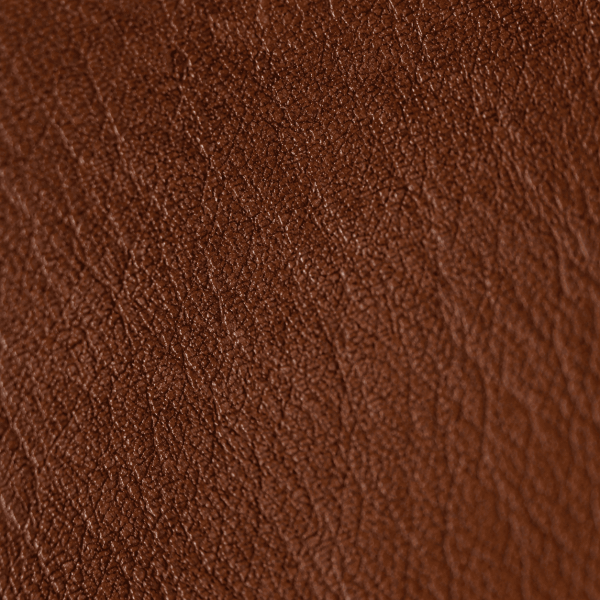
Full-grain leather is cut from the outermost layer of the hide with nothing sanded, buffed, or corrected away. The natural pores, texture variations, and any marks from the animal’s life are all intact.
Because no surface fiber has been removed, full-grain retains the tightest, most densely packed collagen structure in the entire hide. This makes it the strongest and most durable grade available. It is also the only grade of leather that develops a genuine patina — the deepening richness of color and texture that comes from oils, handling, and years of wear. A full-grain jacket carried for ten years becomes distinctly yours in a way no synthetic or lower-grade material can replicate.
What to know: Full-grain looks slightly irregular. You may see subtle texture variation between panels. Natural marks may be visible. This is not a defect — it is the proof that the surface has not been sanded flat. If a jacket looks machine-perfect and completely uniform across every inch of surface, it is not full-grain.
Top-Grain Leather — Sanded, Corrected, Finished
Top-grain leather is also from the upper hide layer, but the very surface has been lightly sanded or buffed to remove imperfections — scars, wrinkles, insect bite marks — anything that makes each hide unique. After sanding, a finish coat is applied to create a consistent, polished appearance.
The trade-off: sanding removes some of the tightest surface fibers, slightly reducing tensile strength compared to full-grain. The finish coat seals the pores, which limits breathability and means the leather will not develop the same patina. Top-grain still ages well and remains genuinely durable — it is far superior to genuine or bonded leather — but it performs differently over time than full-grain.
Top-grain is the most widely used leather in quality fashion jackets because it is more forgiving to manufacture with. It looks cleaner and more consistent from piece to piece, which suits fashion-focused silhouettes.
We use top-grain in our fashion jacket lines where a smooth, refined appearance is the priority. We specify it clearly in every product description.


Genuine Leather — What the Label
Doesn't Tell You
This is the term that causes the most confusion — and the most disappointment.
“Genuine leather” sounds like a quality statement. It is not. It is simply confirmation that the material is real leather, not synthetic. In industry practice, products labelled only as “genuine leather” are almost always made from split leather — the lower layers of the hide after the top-grain has been removed. These layers have looser fiber structure, lower tensile strength, and significantly shorter lifespan.
Split leather is often sanded heavily, spray-painted, and embossed with an artificial grain pattern to mimic the appearance of higher-grade leather. The coating creates a plastic-like surface feel and completely eliminates breathability.
At Devilson, we do not use split leather in any of our jacket lines. You will not see the label “genuine leather” used alone in any of our product descriptions. We specify the grade and the hide type on every product.
Bonded Leather — Not Leather
For completeness: bonded leather is not leather in any meaningful sense. It is leftover fiber scraps and dust bonded together with polyurethane onto a backing material. It peels within months of regular use. We never use it, and we mention it only so you know what to avoid.
The Hides We Use — Animal Source and What It Means
The grade of the hide is only part of the picture. The animal source — cowhide, lambskin, shearling — determines the weight, texture, abrasion resistance, and how a jacket wears on the body.
Cowhide — Our Primary Material for Motorcycle and Biker Jackets
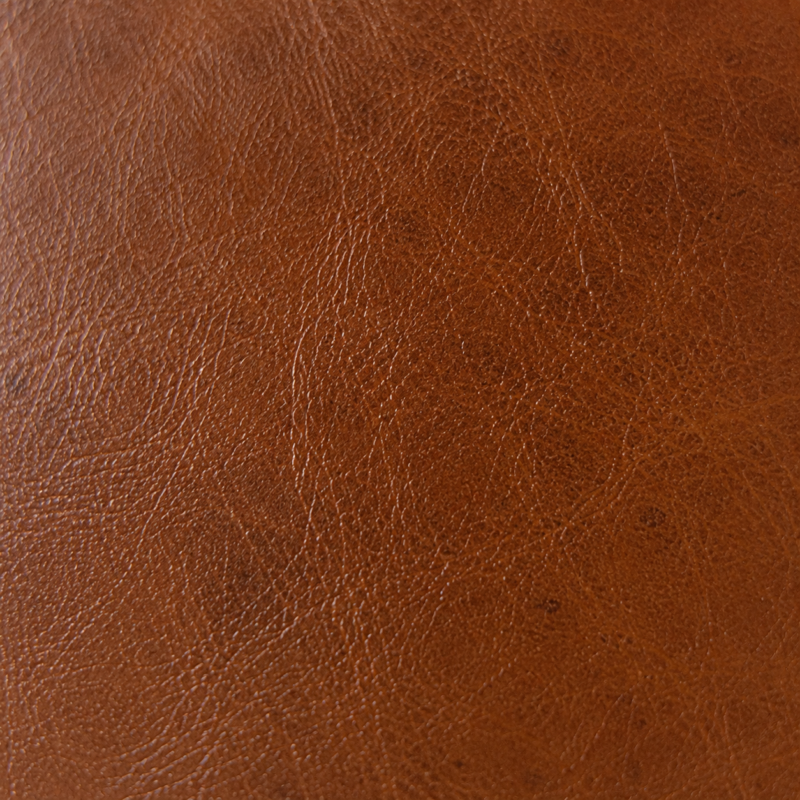
Cowhide comes from mature cattle. The hide from a full-grown animal is thick — typically 1.0mm to 1.4mm in our jacket-grade hides — with tightly interwoven collagen fibers that give it the highest abrasion resistance of any commonly used jacket leather.
This is why cowhide has been the standard for motorcycle jackets since the early 1900s. In a slide, cowhide at 1.2mm thickness buys you time — the material resists road abrasion significantly longer than thinner, softer hides. For serious riders, there is no substitute.
The practical reality of cowhide is this: it is firm when new. It holds its own shape rather than draping against the body. This is not poor quality — it is the physical structure that creates that protection. With regular wear, cowhide softens and molds to the wearer’s shape, developing a fit that is entirely personal. Most cowhide jackets feel genuinely broken in by the third month of regular use.
We use cowhide in: Biker jackets, motorcycle jackets, MotoGP-style jackets, aviator jackets, and trucker jackets — any style where structure and protection are part of the design intent.
Thickness we specify: 1.0mm to 1.4mm depending on the style. We include this in product specifications where it is relevant.
Lambskin — Our Primary Material for Fashion and Slim-Fit Jackets
Lambskin comes from young sheep. At the thicknesses we use (0.6mm to 0.9mm for fashion jackets), it is noticeably lighter and softer than cowhide — closer to a heavy shirt than a structured outerwear piece. It drapes against the body rather than holding shape, which is what makes it appropriate for fashion-cut silhouettes: bombers, slim biker jackets worn as daily layers, and women’s fashion jackets.
The softness of lambskin also means it requires no break-in period. You put on a lambskin jacket and it is immediately comfortable. This is a significant practical advantage for buyers who wear their jacket daily.
What lambskin lacks is abrasion resistance. At road speeds, lambskin at standard fashion jacket thickness will not provide meaningful protection against pavement. We are transparent about this: our lambskin jackets are fashion garments, not motorcycle PPE. If you are buying a jacket primarily for riding, cowhide is the correct material.
We use lambskin in: Women’s fashion jackets, men’s fashion slim-cut jackets, and bomber styles designed as fashion outerwear.
Care note: Lambskin is more sensitive to moisture and scratching than cowhide. Condition every 2 to 3 months and store away from direct light.


Shearling — Genuine Sheepskin with the Wool Retained
Shearling is sheepskin where the wool has not been removed. The leather side faces outward; the dense, natural wool faces inward. This structure provides genuine insulation — wool is one of the most effective natural insulators available — without the bulk of a synthetic-filled jacket.
Shearling cannot be replicated convincingly by synthetic alternatives. The weight, warmth, and texture of genuine shearling is immediately distinguishable from faux versions. The Toscana shearling we use in our higher-end coats features long, silky wool fiber with a particularly refined finish.
Our shearling products are built on a suede-finish leather outer — the softer, napped side of the sheepskin — which is the traditional construction for shearling outerwear. This is distinct from a smooth leather exterior with synthetic shearling lining, which is a cheaper construction you will find in many high street alternatives.
We use shearling in: Shearling gilets, Toscana hooded coats, and shearling-lined jacket styles in our winter collection.
Vegan Leather (PU) — Honest About What It Is
We carry a selection of vegan leather jackets for customers who prefer animal-free options. We will be direct about the material: vegan leather is polyurethane (PU) — a synthetic material manufactured to mimic the appearance and some of the handle of real leather.
PU vegan leather has improved significantly in quality over the past decade. The versions we select have a genuine leather-like hand feel, hold their color well, and are lightweight and water-resistant from day one. What PU cannot do: develop a patina, breathe the way genuine leather does, or match the lifespan of a well-maintained cowhide jacket.
If you choose our vegan range for ethical reasons, you are making a considered choice we respect. We simply will not tell you it performs identically to real leather — it does not, and you should know that before you buy.
We use PU vegan leather in: Our dedicated vegan leather jacket range, clearly labelled on every product page.

How Leather Is Tanned — And Why It Affects What You Buy
Tanning is the process that converts raw animal hide into usable leather. Without it, a hide would harden, rot, and fall apart. The tanning method chosen by the tannery determines the feel, flexibility, water resistance, and long-term behavior of the finished leather.
There are two primary methods in use today:
Chrome Tanning — What Most Fashion Leather Jackets Use
Chrome tanning uses chromium sulphate salts to stabilize the hide. The process takes approximately one to two days, compared to months for vegetable tanning. The result is leather that is soft and pliable from day one, water-resistant, colorfast, and available in the full spectrum of colors — including the bright reds, blues, and custom hues in our MotoGP and sublimation jacket range.
Approximately 80 to 90 percent of the world’s leather is chrome-tanned, including the majority of quality fashion jackets from established European and UK brands. Chrome tanning is not a corner-cutting choice — it is the technically appropriate process for garment leather because it produces exactly the properties that make a jacket wearable and practical.
Chrome-tanned leather does not develop the same deep patina as vegetable-tanned leather, and the surface finish will not absorb conditioners as deeply. It is a material that holds its appearance over time rather than evolving into something new.
The chrome tanning we specify: We source from tanneries that comply with the REACH regulation framework — the EU’s standard for restricting harmful chemical substances in manufactured goods. We do not accept hides from unregulated tanneries where heavy metal contamination in the waste stream is a known issue.
Vegetable Tanning — Traditional, Expensive, Used in Select Products
Vegetable tanning uses naturally occurring tannins extracted from tree bark — oak, chestnut, mimosa — to preserve and stabilize the hide. The process takes four to eight weeks and requires significantly more skill and oversight than chrome tanning.
The result is leather with a firmer initial handle that softens with age, an earthy natural scent, and the ability to develop a truly deep patina over years of use. Vegetable-tanned leather is biodegradable and generally considered the more environmentally responsible option.
The trade-off: it is more expensive, less water-resistant than chrome-tanned, and not available in bright colors. It is most commonly associated with belts, wallets, saddle bags, and heritage-style products rather than fashion jackets.
Where we use vegetable-tanned leather: Our leather belts and select accessories where the firmer structure and patina development are appropriate to the product.
Our Construction Standards — What Holds a Jacket Together
The leather itself is only part of what determines the quality of a jacket. How it is cut, joined, and finished matters equally.
Stitching: We specify a minimum stitch density on all stress points — collars, cuffs, armhole seams, and zipper tape attachment. Higher stitch density at these points prevents seam failure under stress. You can check this yourself: run a finger along any seam. Tight, even stitching with no loose threads is the standard.
Zippers: We use YKK and equivalent-grade zippers on our jackets. A zip that sticks, skips, or corrodes within a season is a quality failure, and it is one of the most common ways that lower-cost leather jackets fail before the leather itself does.
Lining: Our jacket linings use either a viscose-blend or polyester satin depending on the jacket style. Viscose breathes better; polyester satin is more durable for frequent wear. Neither should feel rough against the skin or pull when the jacket is put on.
MotoGP and Motorcycle Suit Construction: Our race suits feature reinforced cowhide leather panels at the shoulders, elbows, and knees — the primary contact zones in a slide. These panels are cut from heavier-weight hides than the body of the suit and double-stitched at the join. Armour pockets are pre-fitted at elbow, shoulder, and back spine positions to accept CE-rated impact protection inserts.
How to Verify Leather Quality Before You Buy
We want you to be able to assess any leather jacket — ours included — against an honest standard. Here is what to check:
The label test: If a product says only “genuine leather” without specifying full-grain or top-grain, assume it is split or corrected-grain leather. Quality manufacturers specify the grade because it is a selling point.
The water test: Place a small drop of water on the surface. Full-grain leather will slowly absorb it through the open natural pores. Top-grain leather with a heavy finish coat will cause the water to bead and roll off — the pores are sealed. Neither is a defect; it tells you the grade.
The consistency test: Full-grain leather has subtle natural variation — slight texture differences between panels, occasional natural marks. If every inch of the surface looks machine-identical, it has been heavily corrected.
The smell test: Real leather has an earthy, organic smell. PU and bonded leather tend to smell chemical or plastic-like. Chrome-tanned leather can have a faintly chemical smell initially, which dissipates with conditioning and wear.
The weight test: Genuine cowhide at 1.0mm or above has noticeable weight and structure. If a jacket claiming to be cowhide feels as light as a windbreaker, the hide weight is too thin for the specification.
What leather do you use in your MotoGP race suits?
Full-grain and top-grain cowhide, 1.0mm to 1.2mm, chrome-tanned. Reinforced panels at primary contact zones are cut from heavier-weight hides. Race suits are constructed with double stitching throughout and include pre-fitted CE armour pockets.
Is your leather sourced ethically?
Our hides are sourced as a byproduct of the meat industry — the same supply chain that produces beef for consumption. The hides would otherwise be discarded. We do not work with tanneries in regions without environmental regulation oversight.
Why does my new jacket feel stiff?
If it is a cowhide jacket, this is correct. The firmness is the fiber density that gives it abrasion resistance. Wear it regularly and condition it once a month for the first three months. It will soften and conform to your shape.
How long should a Devilson leather jacket last?
A properly maintained full-grain or top-grain cowhide jacket should last 15 to 25 years of regular wear. Lambskin, with proper care, typically gives 10 to 15 years. The limiting factor in almost every case is care — or the absence of it — not the leather itself.
Can I machine wash my leather jacket?
No. Machine washing destroys the natural oils in the leather and causes the hide to dry out, crack, and distort. Spot clean with a damp cloth for minor marks. For deeper cleaning, use a leather-specific cleaner. Condition after any cleaning.