


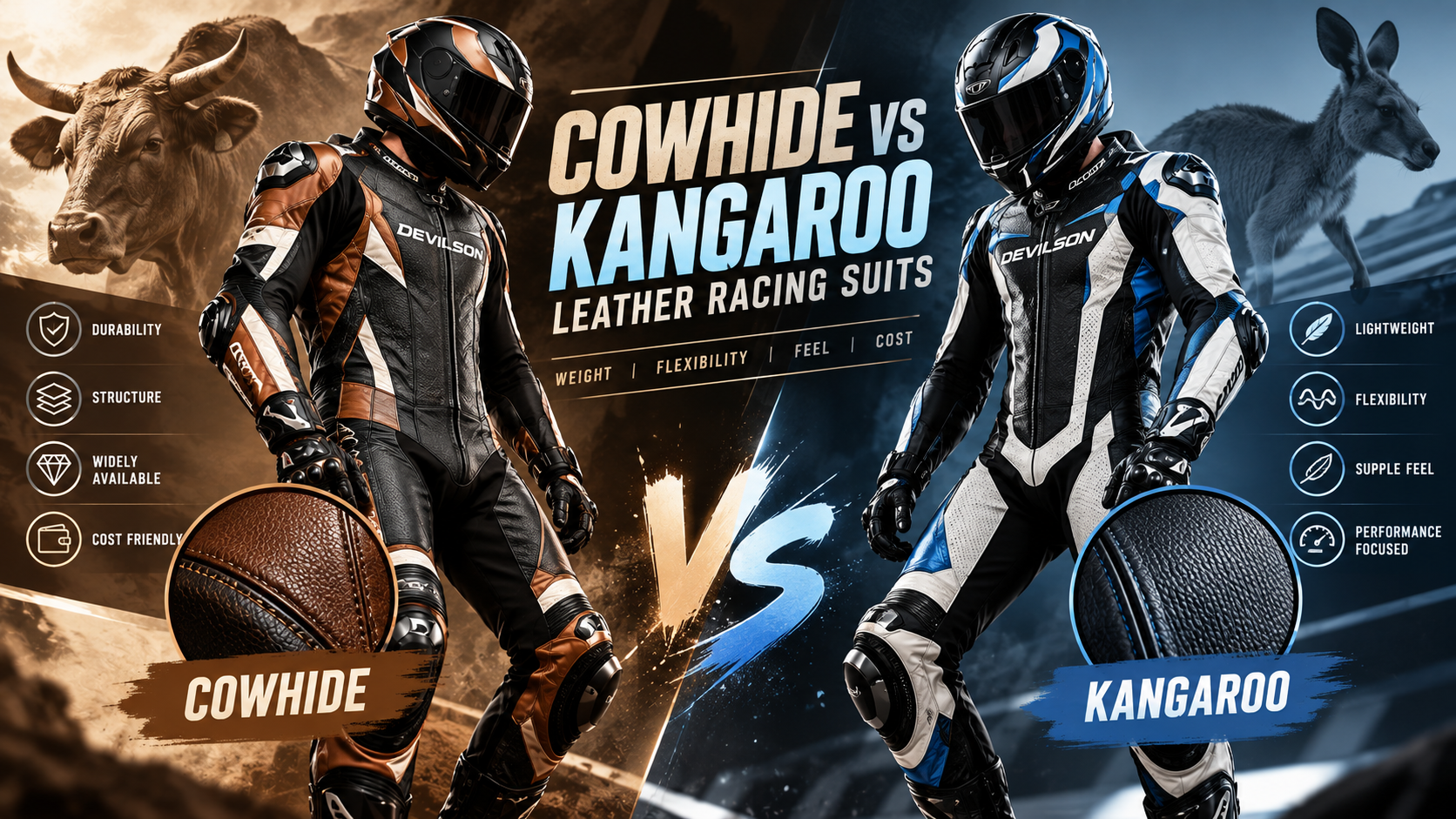
Cowhide vs Kangaroo Leather Racing Suits
Cowhide and kangaroo leather are both used in motorcycle racing suits, but they offer different combinations of weight, feel, flexibility, structure and cost. This guide explains the key differences to consider when choosing a racing suit.
Cowhide and Kangaroo Leather Are Not the Same
Leather choice has a direct effect on how a motorcycle racing suit feels and behaves. Cowhide is widely used for protective motorcycle garments because it offers a substantial, structured feel. Kangaroo leather is known for being comparatively lightweight and supple.
The right material depends on the rider’s priorities, budget, intended use and the construction of the complete suit. Leather type should therefore be considered alongside thickness, pattern design, stitching, protective components and fit.
SHORT
ANSWER
Cowhide generally provides a more substantial and structured feel, while kangaroo leather is valued for its low weight and supple feel. Neither material alone determines the overall performance of a racing suit; the complete garment construction matters.
Cowhide vs Kangaroo Leather
| Factor | Cowhide Leather | Kangaroo Leather |
|---|---|---|
| Overall Feel | Typically more substantial and structured. | Typically lighter and more supple. |
| Weight | Generally heavier when comparable garment construction is considered. | Known for enabling lightweight leather garment construction. |
| Flexibility | Can require more break-in depending on thickness and construction. | Often appreciated for its supple feel and natural flexibility. |
| Structure | Provides a substantial, firm feel. | Usually offers a softer, more flexible feel. |
| Cost | Commonly available across a wide range of motorcycle garment price points. | Often positioned at a higher price point. |
| Rider Preference | Suitable for riders who prefer a substantial leather feel. | Attractive to riders who prioritize lightness and flexibility. |
Cowhide Leather Racing Suits
Cowhide is a familiar material in motorcycle apparel and is available in different thicknesses, finishes and constructions. Its relatively substantial feel makes it a common choice for riders looking for a traditional leather racing garment.
Substantial Feel
Cowhide can provide a firm and substantial sensation, particularly in thicker racing garment constructions.
- Structured leather feel
- Widely used in motorcycle apparel
- Available across different constructions
- Can become more comfortable with normal use
Broad Availability
Cowhide is commonly available, giving riders a broad range of choices in suit construction, thickness, finish and price.
- Many product options
- Different leather weights available
- Traditional racing-suit material
- Often easier to source
Kangaroo Leather Racing Suits
Kangaroo leather is valued in motorcycle apparel for its lightweight character and supple feel. Riders considering it should still evaluate the complete suit rather than judging the material in isolation.
Lightweight Feel
One of the main reasons kangaroo leather is used in performance motorcycle garments is its ability to provide a lightweight leather construction.
- Low-weight leather option
- Comfortable for performance-focused use
- Supple hand feel
- Can reduce the substantial sensation of thicker leather
Supple Movement
Kangaroo leather is often selected by riders who value a flexible, close-to-the-body feel when moving in an aggressive riding position.
- Supple feel
- Good natural flexibility
- Comfortable articulation
- Performance-oriented material choice
How the Two Materials Feel Different
The difference becomes particularly noticeable when the rider wears the suit in a forward racing posture. Weight, thickness, panel construction and stretch zones all contribute to the final feel.
Often provides a more substantial and structured sensation, especially in heavier constructions.
Commonly selected for its lighter feel and supple character.
Which Material Fits Your Priorities?
Prefer a Substantial Feel?
Riders who prefer a more structured and substantial leather sensation may consider cowhide constructions.
Prioritize Low Weight?
Riders focused on keeping the garment lightweight may be interested in kangaroo leather construction.
Want a Supple Feel?
Kangaroo leather can appeal to riders who value a naturally supple material and flexible sensation.
Want More Options?
Cowhide is broadly used in motorcycle apparel and is available in many different suit constructions.
Watching Cost?
Compare complete suit prices rather than leather alone because construction, protection and finishing also influence cost.
Buying for Track Use?
Material choice should be considered together with racing fit, stretch panels and protective-component positioning.
Material Is Only One Part of the Suit
A racing suit should not be judged by leather type alone. Look at leather thickness, panel design, stitching, closures, stretch construction, armor placement and overall fit before making a purchase decision.
Leather Type Does Not Tell the Whole Story
Two racing suits made from the same type of leather can still feel and perform differently because of their construction. Thickness, patterning, seam placement, reinforcement, stretch zones and protective components all influence the finished garment.
For this reason, avoid choosing a racing suit solely because it uses cowhide or kangaroo leather. Evaluate the complete specification and make sure the suit is designed for its intended riding environment.
Do not treat leather species alone as a substitute for a complete assessment of suit construction or protective performance. Manufacturer specifications and applicable certification information should be checked for the specific suit.
Cowhide vs Kangaroo Racing Suit FAQ
Is kangaroo leather lighter than cowhide?
Is cowhide good for motorcycle racing suits?
Why do riders choose kangaroo leather racing suits?
Does thicker leather automatically make a racing suit better?
Is kangaroo leather more expensive?
Which leather is more flexible for racing?
Should I choose leather type before checking fit?
Choose the Material Around Your Riding Priorities
Cowhide offers a familiar, substantial leather feel and broad availability, while kangaroo leather is valued for its lightweight and supple character. Instead of choosing purely by leather type, compare the complete racing suit: construction, fit, stretch zones, protective components, specifications and intended use.