


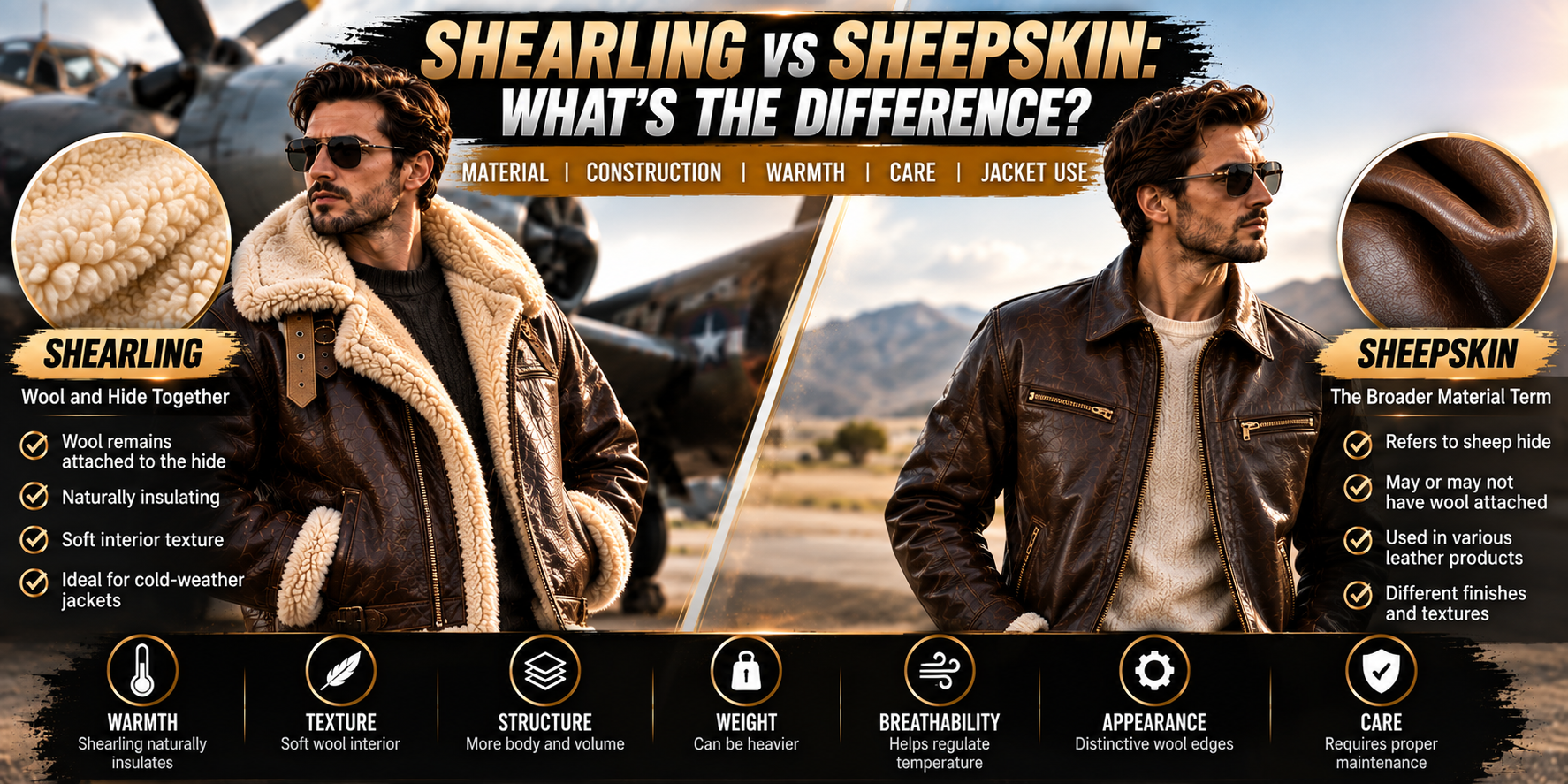
Shearling vs Sheepskin
Understand the difference between shearling and sheepskin, including terminology, construction, warmth, leather quality, comfort, care and how each material is used in jackets.
Shearling and Sheepskin Are Closely Related Terms
The terms shearling and sheepskin are often used interchangeably, but they can describe different aspects of a sheep hide and the way it is prepared and used.
Sheepskin refers broadly to the hide and skin of a sheep. Shearling commonly describes a sheepskin that has been tanned with the wool left attached to the hide.
This distinction matters when shopping for leather jackets because the material affects warmth, texture, weight, breathability, appearance and overall construction.
What Does Each Term Mean?
Wool and Hide Together
Shearling generally refers to a sheepskin that retains its wool on one side while the leather side is finished for use as the outer surface of the garment.
The Broader Material Term
Sheepskin is the broader term for sheep hide. It can be processed in different ways depending on whether the wool remains attached or is removed.
Wool Remains Attached
In a shearling garment, the wool remains attached to the hide. This creates a naturally insulating construction and gives shearling jackets their characteristic soft interior.
A Broader Category
Sheepskin describes the underlying animal hide and can refer to material prepared in different ways. Not every sheepskin product has the same wool configuration.
What Changes When You Choose Shearling?
Warmth
Wool naturally provides insulation, making shearling especially useful for cold-weather outerwear.
Texture
The wool interior creates a distinctive soft and textured feel that differs from conventional textile linings.
Structure
Shearling can give a jacket more body and volume because the material combines leather with wool.
Weight
Material thickness, wool density and garment construction all contribute to the final weight of the jacket.
Breathability
Natural wool can help regulate moisture and temperature, although performance depends on the complete garment.
Appearance
Visible wool edges, collars and cuffs create the recognizable character associated with shearling jackets.
Shearling vs Sheepskin Comparison
| Feature | Shearling | Sheepskin |
|---|---|---|
| Meaning | Usually describes sheepskin with wool retained | Broad term for sheep hide |
| Wool | Typically remains attached | May or may not remain attached |
| Warmth | Naturally insulating | Depends on processing and construction |
| Interior | Natural wool | Can vary by product |
| Typical Use | Cold-weather jackets and coats | Jackets, leather goods and other products |
| Texture | Wool interior with leather exterior | Depends on finishing |
How to Judge a Shearling Jacket
The word shearling alone does not determine the complete quality of a jacket. Construction, hide selection, wool consistency, stitching and finishing should all be examined.
Compare the actual material and construction rather than relying only on labels such as “premium,” “genuine” or “real.”
Why Shearling Jackets Often Feel Different
A shearling jacket is constructed differently from a conventional leather jacket with a separate fabric lining. The wool remains part of the material itself, which can create additional thickness.
For that reason, sizing should account for the jacket’s actual construction and the layers you intend to wear underneath.
Shoulders
The shoulder seam should sit naturally without excessive restriction or unwanted drooping.
Chest
Leave enough room for the layers you expect to wear during colder weather.
Sleeves
Check sleeve length while standing naturally with your arms relaxed.
Does Shearling Need Special Care?
Yes. Shearling combines leather and wool, so care should account for both sides of the material.
Shearling vs Sheepskin FAQs
Is shearling the same as sheepskin?
Is shearling real leather?
Is shearling warm?
Is sheepskin good for leather jackets?
Is shearling heavier than regular leather jackets?
How long can a shearling jacket last?
Can shearling jackets get wet?
Understand the Material Before You Buy
Shearling and sheepskin are closely connected terms, but understanding the distinction helps you evaluate leather jackets more accurately.
Shearling generally combines a leather hide with its natural wool, creating a warm and distinctive material for cold-weather outerwear.
When choosing a jacket, look beyond the label and examine the hide, wool, construction, fit and finishing quality.