


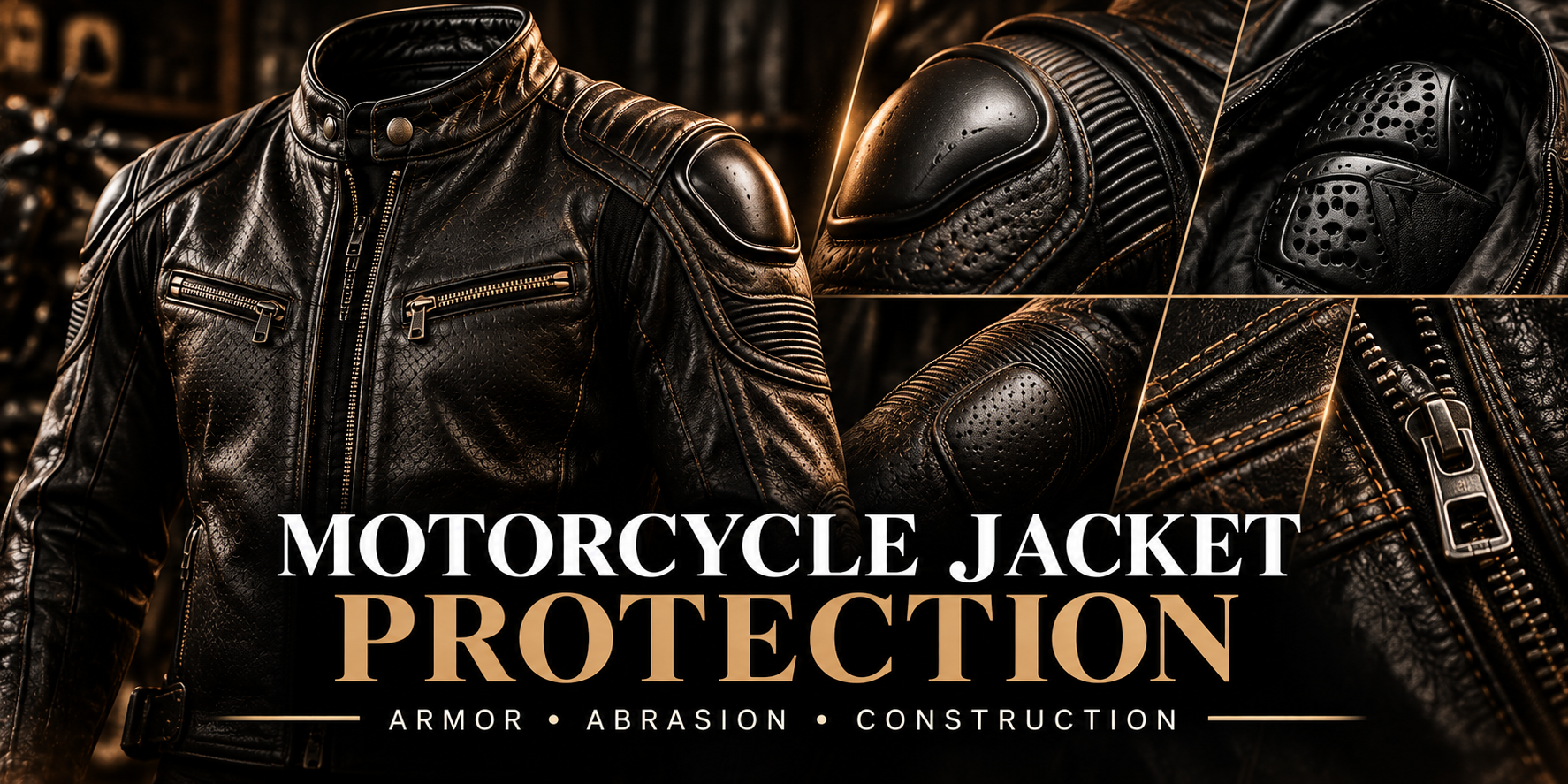
Leather Motorcycle Jacket Protection Guide: Armor, Abrasion & Construction
Understand the construction features that matter when evaluating a motorcycle leather jacket, from leather weight and reinforced panels to armor pockets, seams, closures, ventilation and riding fit.
What Makes a Leather Motorcycle Jacket Protective?
A motorcycle jacket should not be judged by leather appearance alone. Riding-oriented construction involves several components working together, including the outer material, reinforced areas, protective armor provisions, seams, closures, ventilation and fit.
The important distinction is between a jacket designed primarily as fashion outerwear and one constructed with motorcycle riding in mind. A stylish leather jacket may look similar while lacking some of the construction features riders should inspect.
Motorcycle Jacket Protection Checklist
Does Thicker Leather Automatically Mean More Protection?
Leather thickness is an important specification, but thickness alone does not tell you everything about a motorcycle jacket’s protective construction.
Hide type, leather quality, panel construction, reinforcement, stitching and the overall design should be considered together.
Why Reinforced Panels Matter
Motorcycle jackets can use additional reinforcement in areas where greater structural support is desired. The exact placement depends on the jacket’s design and intended use.
When inspecting a jacket, pay particular attention to high-stress areas such as the shoulders, elbows, back and other major seam junctions.
Shoulder Areas
Inspect panel construction and any provision for shoulder protection.
Elbow Areas
Check reinforcement, articulation and elbow-protector provisions.
Back
Look for appropriate construction and a dedicated back-protector pocket where specified.
High-Stress Seams
Inspect stitching quality and reinforcement around major seams.
Check the Armor Pockets Before You Buy
A motorcycle jacket can be designed with dedicated pockets or compartments for protective inserts. Before buying, verify exactly which protector locations the specific jacket supports.
Inspect the Seams, Not Just the Leather
A motorcycle jacket is made from multiple leather panels joined together. The quality of those connections is an important part of overall garment construction.
Examine areas where several panels meet and where the jacket is likely to experience repeated movement. Stitching should appear consistent, clean and appropriate for the construction.
What to Inspect
- Consistent stitching along major seams
- Clean seam alignment
- Reinforcement around high-stress areas
- No obvious loose or uneven stitching
- Secure connections between major panels
Zippers, Cuffs & Waist Closures Matter
Hardware is easy to overlook when evaluating a motorcycle jacket, but zippers, cuffs and adjustment systems are important parts of the garment’s construction.
Why Ventilation Matters for Riding
A motorcycle jacket can become uncomfortable when airflow is limited, particularly during warmer riding conditions. Ventilation features can therefore be an important part of selecting a riding jacket.
Depending on the specific design, airflow may come from fixed vents, removable ventilation panels, perforated leather or other construction features.
Why Fit Is Part of Motorcycle Jacket Protection
A motorcycle jacket should be evaluated in the position in which it will actually be used. A jacket that fits well while standing may behave differently when the rider is seated and reaching toward the handlebars.
Motorcycle Jacket vs Fashion Leather Jacket
A fashion leather jacket and a motorcycle jacket can share similar styling, but their construction priorities can be different.
| Feature | Riding-Oriented Jacket | Fashion Jacket |
|---|---|---|
| Leather | Selected with the intended riding use in mind. | Often selected primarily for appearance, weight and feel. |
| Armor Provision | May include dedicated protector pockets or compartments. | May not provide dedicated motorcycle armor provisions. |
| Fit | Designed with riding posture and movement in mind. | Primarily designed around everyday fashion fit. |
| Ventilation | May include vents or perforated construction depending on model. | Usually prioritized according to style and everyday comfort. |
10 Things to Check Before Buying
A Note About Motorcycle Protection
No motorcycle jacket can eliminate the risk of injury. Protective performance depends on the complete garment, correctly fitted protective equipment, riding conditions and many other factors. Always check the manufacturer’s specific product information rather than assuming that a feature provides a particular level of protection.
Frequently Asked Questions
Look at the Complete Construction
Choosing a motorcycle leather jacket requires more than looking at the leather’s appearance. Examine the material, reinforced panels, armor provisions, seams, closures, ventilation and fit together.
Most importantly, distinguish a jacket designed for motorcycle use from ordinary fashion outerwear. Product-specific specifications and documentation should always take priority over assumptions based on appearance or a single material specification.
A well-informed purchase starts with understanding how the entire jacket is constructed—not simply how it looks.