


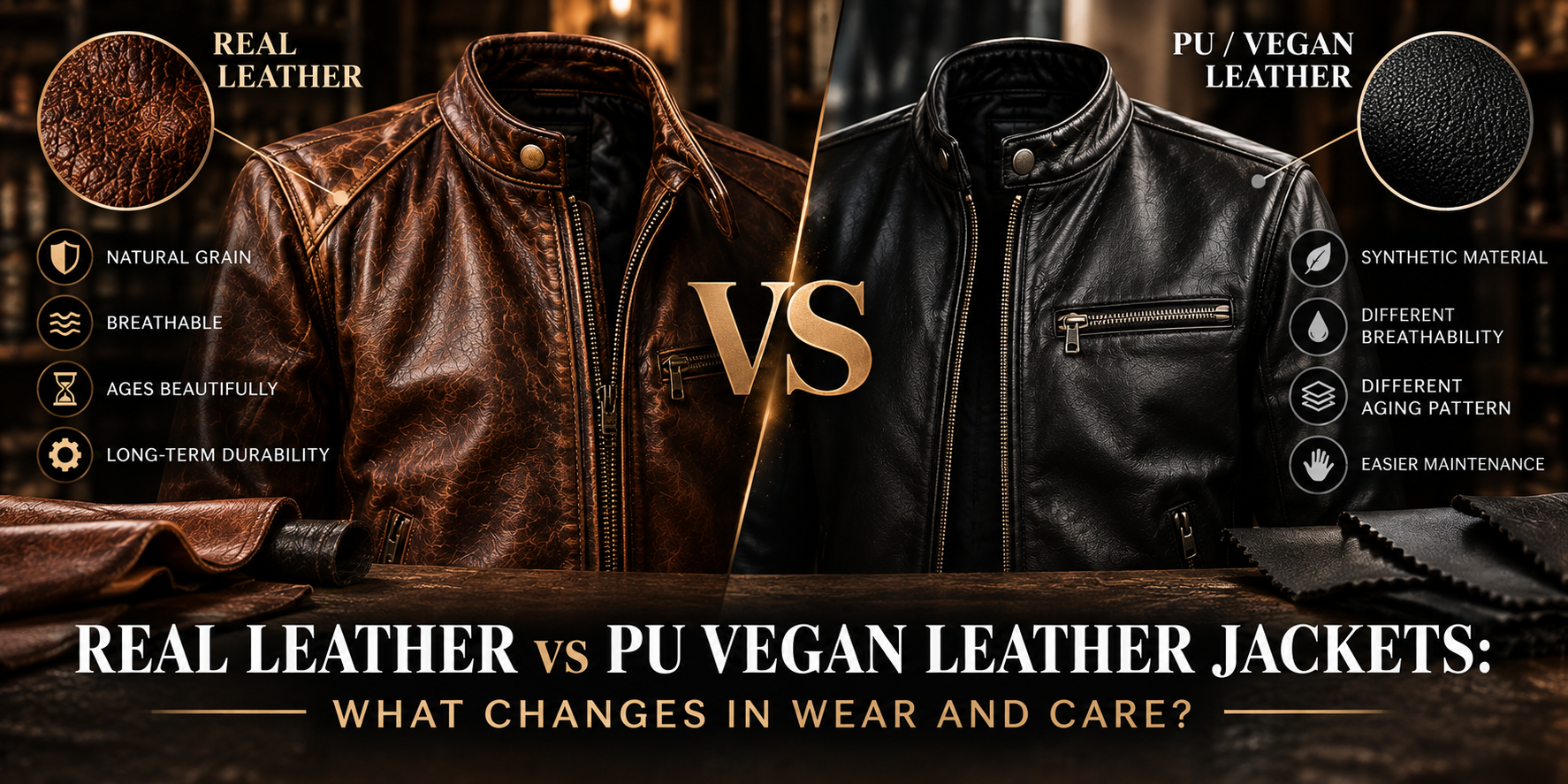
Real Leather vs PU Vegan Leather Jackets: What Changes in Wear & Care?
A practical comparison of material feel, breathability, water resistance, aging, maintenance, durability and the considerations that matter when choosing between genuine leather and PU-based alternatives.
Real Leather vs Vegan Leather: Why the Difference Matters
Leather jackets can look similar at first glance, but the material underneath the finish can create very different wearing experiences. Genuine leather comes from animal hide, while many vegan leather jackets use synthetic materials such as PU coatings or other leather-look constructions.
The difference becomes more noticeable with regular use. Feel, flexibility, breathability, moisture response, surface aging, maintenance and long-term durability can all vary between materials.
At a Glance
Natural Hide
Natural grain, distinctive texture and an aging process that can change the appearance and feel of the jacket over time.
Synthetic Construction
A leather-look alternative that can provide a different feel, maintenance routine and aging pattern.
What Are the Jackets Actually Made From?
Genuine leather is produced from animal hide that has been processed and tanned for use as a finished material. Devilson’s published material information focuses on genuine leather, including full-grain and top-grain options.
PU vegan leather, by contrast, generally uses a synthetic base and coating designed to create a leather-like surface. The exact construction can vary between products.
How Do They Feel When You Wear Them?
Genuine leather has a natural structure that changes as it is worn. Devilson notes that genuine leather can soften and mold to the body through use, creating a more personalized feel over time.
PU alternatives can also be flexible and comfortable, but the exact feel depends heavily on the synthetic construction, coating and backing material used by the manufacturer.
Breaks In
Can soften, flex and develop greater character through regular wear.
Depends on Construction
Feel and flexibility vary depending on the synthetic material and coating used.
What About Breathability?
Breathability is influenced by more than the outer material. Lining, garment construction, perforation, fit and the specific material all affect how air and moisture behave inside a jacket.
Devilson’s construction information specifically highlights breathable inner linings such as viscose or polyester blends as part of its jacket construction approach.
How Do Real and PU Leather React to Water?
Water resistance should not be confused with being completely waterproof. Both genuine and synthetic jackets can require care when exposed to moisture.
For genuine leather, Devilson’s care guidance recommends using a suitable water-resistant leather protectant before extended wet-weather riding and allowing soaked leather to dry naturally at room temperature.
How Do They Age Over Time?
One of the most visible differences between genuine and synthetic leather is the way the surface changes with use.
Genuine leather can develop a patina and change in feel as it is worn. Devilson’s material information notes that full-grain leather retains its natural surface and can develop a richer patina over time.
Synthetic leather follows a different aging process because its surface is manufactured rather than being a natural hide grain. Depending on the construction and coating, wear can appear through changes to the surface finish.
Real Leather vs PU: Care Differences
| Care Area | Genuine Leather | PU / Vegan Leather |
|---|---|---|
| Cleaning | Use products appropriate for leather and avoid harsh treatment. | Follow the manufacturer’s care instructions for the synthetic surface. |
| Conditioning | Appropriate conditioning can help maintain the hide. | Traditional leather conditioning is not automatically appropriate for synthetic coatings. |
| Moisture | Avoid prolonged exposure and dry naturally when wet. | Water response depends on the specific synthetic construction. |
| Storage | Store correctly on a suitable hanger in a cool, dry environment. | Follow product-specific storage instructions and avoid damaging the surface coating. |
Which One Is More Durable?
Durability should be evaluated at the product level rather than assuming that every jacket made from one material will perform identically.
Leather grade, hide selection, thickness, stitching, seams, lining, hardware and frequency of use can all affect the useful life of a jacket.
Genuine Leather
- Natural hide structure
- Can soften with wear
- Can develop a natural patina
- Requires appropriate maintenance
PU / Vegan Leather
- Synthetic surface construction
- Consistent leather-look appearance
- Aging depends on coating and construction
- Care should follow product instructions
What About the Ethical Difference?
The choice between genuine and vegan leather can also involve personal ethical priorities. Genuine leather uses animal hide, while vegan leather is designed without animal hide.
However, “vegan” describes the absence of animal-derived material; it does not by itself describe every aspect of a product’s environmental impact, manufacturing process or end-of-life characteristics.
Which Material Fits Your Buying Priorities?
- You want natural hide and grain.
- You like the way leather develops character with wear.
- You are comfortable with leather-specific maintenance.
- Animal-derived materials fit your purchasing priorities.
- You prefer a non-animal leather alternative.
- You prefer a synthetic leather-look material.
- The specific product’s construction meets your requirements.
- The material’s care and aging characteristics suit your use.
Jacket Construction Still Matters
Material is only one part of a jacket’s overall quality. Devilson’s published construction information emphasizes reinforced stitching, durable YKK hardware, breathable inner linings and clean seam alignment.
How to Protect Your Jacket
Frequently Asked Questions
Choose the Material That Matches How You Wear
Real leather and PU vegan leather are not simply two versions of the same material. They can differ in feel, aging, maintenance, construction and the considerations involved in choosing them.
Genuine leather offers natural hide characteristics and can develop a distinct patina over time. PU vegan leather provides a non-animal alternative, with its own material and care characteristics.
Before buying, look beyond the label. Consider the material, construction, intended use, maintenance requirements and the priorities that matter most to you.