


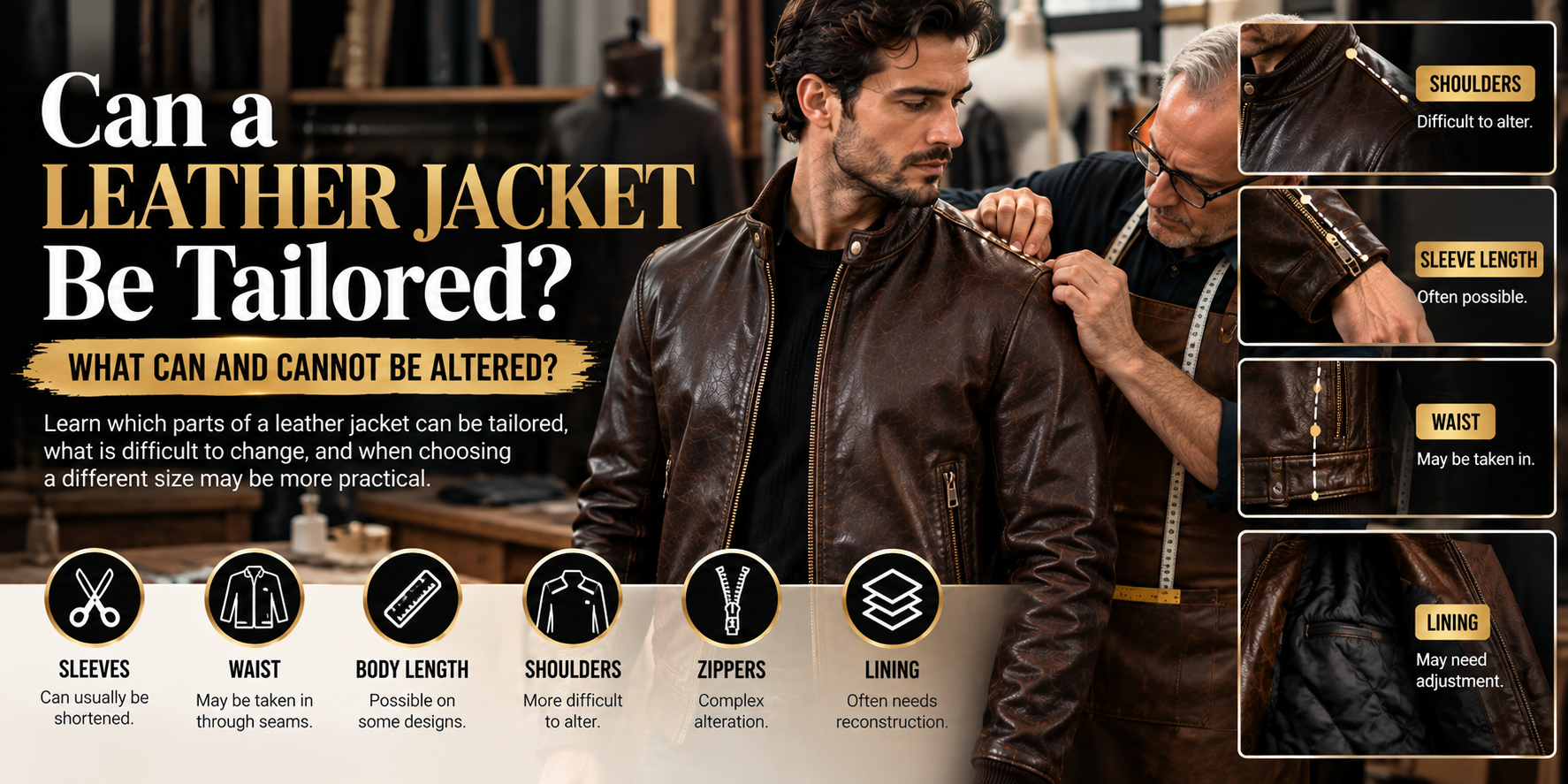
Can a Leather Jacket Be Tailored?
Learn which parts of a leather jacket can usually be altered, which changes are difficult or risky, and when choosing a different size may be more practical.
Can a Leather Jacket Be Tailored?
Yes, some leather jackets can be tailored, but leather alterations are more complicated than altering many fabric garments. The construction, leather thickness, lining, seams, pockets and hardware all affect what a tailor can realistically change.
Smaller adjustments such as sleeve length or certain waist changes may be possible when the jacket has enough construction allowance. More complicated alterations involving shoulders, armholes, zippers or major pattern changes can be substantially more difficult.
Before altering an expensive leather jacket, it is worth having an experienced leather tailor inspect the garment rather than assuming every measurement can be changed.
Which Parts of a Leather Jacket Can Be Altered?
Sleeve Length
Sleeve length can sometimes be shortened, depending on the cuff construction, zipper placement and available material.
Waist or Side Seams
Some jackets can be taken in through suitable side or internal seams when the pattern provides enough allowance.
Body Length
Certain jackets may allow length changes, but pockets, zippers, waistbands and hem construction can limit the work.
Lining Adjustments
The lining may need to be opened and reconstructed when making some exterior alterations.
What Parts Are Harder to Alter?
Shoulders and Armholes Require Special Care
Shoulder width and armhole construction are closely connected to the jacket’s pattern. Changing these areas can affect sleeve movement, seam alignment and the overall shape of the garment.
Because of this, shoulder alterations should be evaluated by a tailor who regularly works with leather rather than treated like a simple sleeve or waist adjustment.
Do Not Assume Every Jacket Can Be Resized
Leather jackets contain permanent stitch holes, shaped panels, linings, pockets and hardware. Removing and repositioning these components can leave visible marks or change the original construction.
When Does Tailoring Make Sense?
Minor Fit Adjustment
Tailoring can be worth considering when the jacket already fits well in the major structural areas and only requires a relatively limited adjustment.
Major Size Difference
If the shoulders, chest, armholes and overall proportions are substantially wrong, buying the correct size may be more practical than attempting extensive reconstruction.
What Should You Check Before Taking a Leather Jacket to a Tailor?
Examine the leather thickness, finish and condition before deciding whether alteration is appropriate.
Decide whether the issue is sleeve length, waist, shoulders, body length or another construction detail.
Existing seams, decorative stitching and panel joins can determine where an alteration is practical.
Zippers, cuffs, snaps, waistbands and pockets may limit how much the surrounding area can be changed.
Choose a professional who has experience working with leather garments and understands leather-specific construction.
Leather Jacket Alterations at a Glance
Sleeves
Often evaluated for shortening, but cuffs and zippers can affect the available options.
Waist
Taking in the body may be possible through appropriate seams when sufficient allowance exists.
Body Length
Possible on some designs, but pockets and hem construction can make the adjustment complicated.
Shoulders
A more complex alteration because shoulder and armhole geometry affect the entire fit.
Zippers
Repositioning or replacing zippers can require substantial reconstruction of the surrounding leather panels.
Lining
The lining may need to be opened, adjusted and correctly reattached after certain alterations.
Is It Better to Tailor or Buy a Different Size?
The answer depends on the size and location of the fit problem. A jacket that fits correctly through the shoulders and chest but has sleeves that are slightly long may be a candidate for a targeted alteration.
A jacket that is substantially wrong across multiple structural areas can be much harder to correct without changing its original proportions.
Start With the Correct Size Whenever Possible
Accurate body measurements and the manufacturer’s size chart should be your first step. Tailoring is generally better used for suitable adjustments rather than compensating for a major sizing mismatch.
Leather Can Be Tailored — But the Construction Matters
Sleeve length, certain waist adjustments and some body changes may be possible, while shoulders, armholes, zippers and major structural changes require much more careful assessment. Before altering a valuable leather jacket, have an experienced leather tailor inspect the garment and identify exactly what can be changed.