


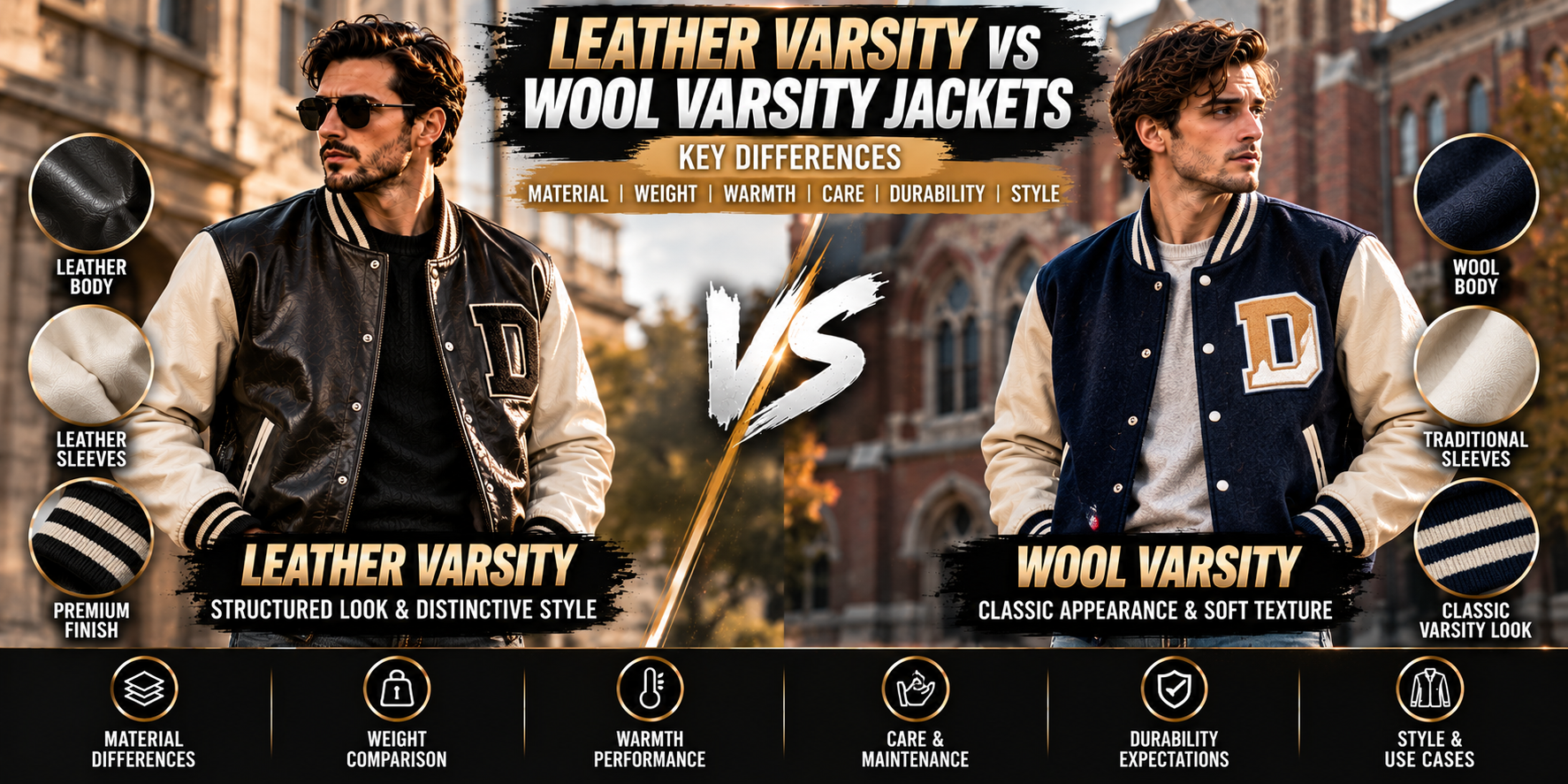
Leather Varsity vs Wool Varsity Jackets
Compare leather and wool varsity jackets by material, weight, warmth, care, durability and everyday style use.
Leather or Wool: What Actually Changes?
Leather and wool varsity jackets share the same broad varsity-inspired silhouette, but the materials can create significantly different wearing experiences.
The biggest differences come from the way each material behaves. Leather can provide a structured outer layer with a distinctive surface and aging character, while wool is commonly associated with a softer, warmer and more traditional varsity feel.
The right comparison therefore goes beyond appearance. Weight, insulation, maintenance, durability expectations and intended styling all deserve attention before choosing between the two.
The Two Jacket Directions
Leather Varsity Jacket
A leather varsity jacket uses leather for some or all of its outer construction. It generally creates a more structured appearance and emphasizes leather texture and finish.
It can work particularly well for streetwear, casual outfits and wardrobes where the jacket itself is intended to become a strong visual element.
Wool Varsity Jacket
A wool varsity jacket uses wool or a wool-rich fabric for the body, often paired with contrasting sleeves and traditional varsity details.
Its softer textile character can create a more classic, collegiate-inspired appearance and a different balance of warmth, weight and flexibility.
Body and Sleeve Materials
The most obvious difference is the material itself. However, varsity jackets can use different combinations of materials, so the product specification should always be checked rather than relying only on the jacket’s name.
Leather Body
Leather can create a structured body with visible grain, texture and a distinctive surface finish.
Wool Body
Wool provides a textile-based body with a softer hand feel and a traditional varsity appearance.
Leather Sleeves
Leather sleeves add structure and can create the classic contrast associated with many varsity designs.
Which One Feels Heavier?
Construction Matters as Much as Material
There is no universal weight difference between every leather and wool varsity jacket. The final weight depends on leather thickness, wool density, lining, insulation, hardware and overall construction.
Instead of judging weight from the material name alone, consider the complete garment and the climate in which you expect to wear it.
Leather vs Wool for Warmth
Warmth is influenced by more than the outer fabric. Lining, insulation, wind resistance, sleeve construction and the fit of the jacket all contribute to how warm a varsity jacket feels.
Leather Varsity vs Wool Varsity
| Factor | Leather Varsity | Wool Varsity |
|---|---|---|
| Surface | Leather grain, texture and finish | Textile texture with a softer appearance |
| Structure | Can provide a more structured outer feel | Generally softer and more textile-like |
| Weight | Depends on hide thickness, lining and hardware | Depends on wool density, lining and insulation |
| Warmth | Depends heavily on lining and insulation | Wool can provide substantial insulation depending on construction |
| Care | Requires leather-appropriate cleaning and conditioning | Requires textile/wool-appropriate cleaning |
| Appearance | Structured, textured and leather-focused | Classic, collegiate and textile-focused |
| Style Use | Streetwear, casual and modern leather looks | Collegiate, casual and traditional varsity styling |
Leather and Wool Need Different Care
Leather Care
Leather should be maintained with products and cleaning methods appropriate for the specific leather finish. Avoid treating it like an ordinary washable textile.
Wool Care
Wool requires care that respects the fiber and garment construction. Follow the manufacturer’s cleaning instructions and avoid unnecessary washing.
Storage
Both jacket types benefit from appropriate storage, protection from prolonged moisture and enough space to maintain their shape.
How Durability Depends on Construction
Material alone does not determine how long a varsity jacket will remain usable. Stitching, seams, lining, hardware, cuffs, pocket construction and maintenance all contribute to long-term wear.
Look Beyond the Outer Material
When comparing jackets, inspect the quality of the seams, attachment points, ribbing, closures and lining. A well-built garment can provide a more consistent wearing experience than one selected only because of its material label.
When Each Style Fits Your Wardrobe
Leather varsity jackets can emphasize a stronger leather-driven streetwear appearance. They pair naturally with denim, casual trousers, sneakers and other modern wardrobe staples.
Wool varsity jackets can lean more heavily into the classic collegiate aesthetic. They work well with casual basics, denim, chinos and traditional varsity-inspired styling.
Neither styling direction is limited to one type of outfit. The color combination, patches, ribbing, fit and other design details can substantially change the final appearance.
What Should You Check Before Buying?
Leather vs Wool Varsity Jacket FAQs
What is the main difference between leather and wool varsity jackets?
Is a leather varsity jacket warmer than a wool varsity jacket?
Which varsity jacket requires more care?
Are leather varsity jackets heavier?
Can both leather and wool varsity jackets be worn casually?
What should I compare before buying a varsity jacket?
Compare the Complete Jacket
Leather and wool varsity jackets offer different combinations of material character, structure, warmth, care requirements and styling.
The most useful comparison is not simply leather versus wool. Examine the complete construction and choose the combination that matches how you plan to wear and maintain the jacket.