


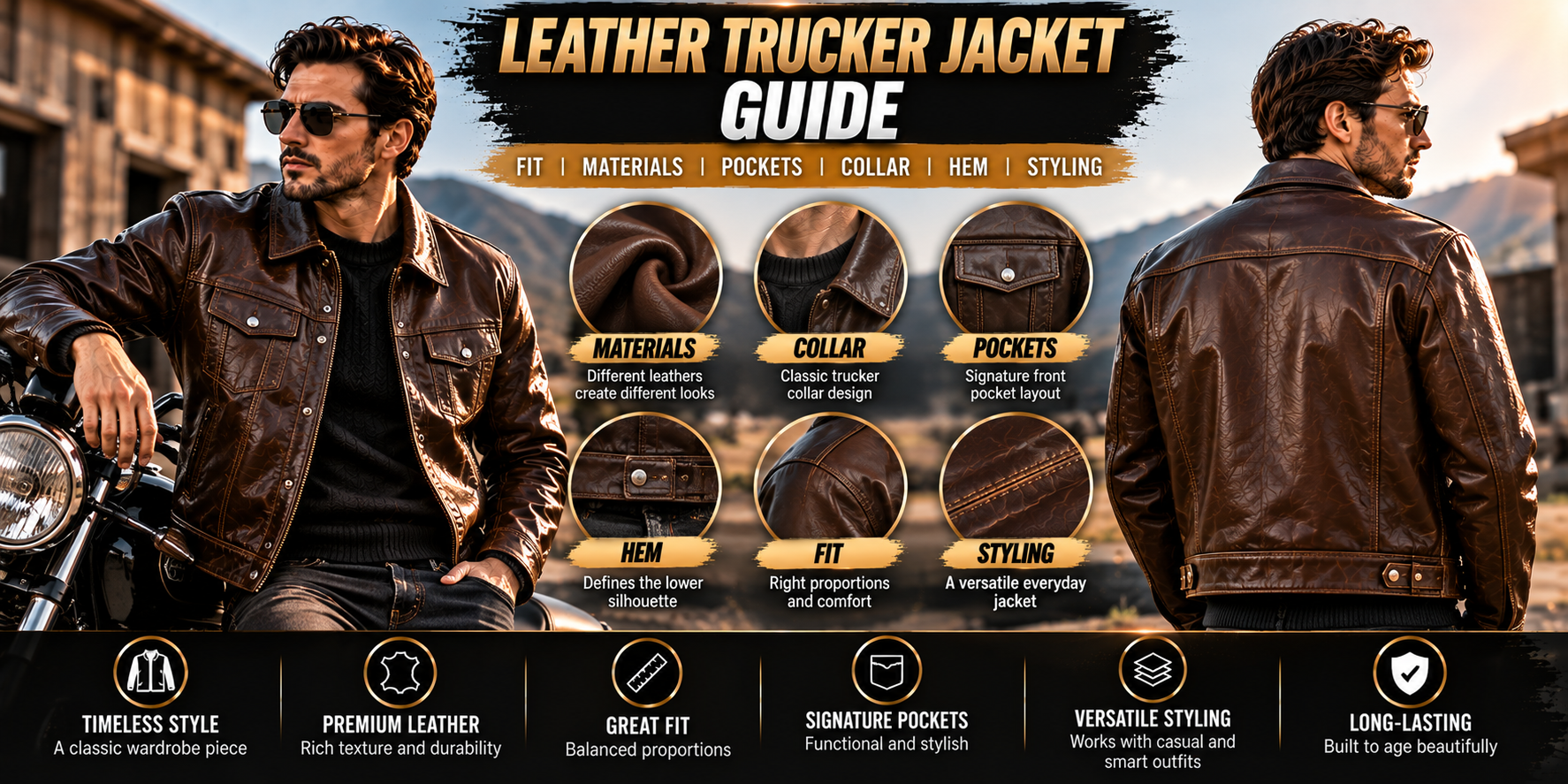
Leather Trucker Jacket Guide
Understand the proportions, pocket layout, collar, hem, leather choices and everyday styling considerations that define a leather trucker jacket.
What Makes a Leather Trucker Jacket Different?
A leather trucker jacket combines a recognizable short-jacket silhouette with the texture and structure of leather. Its identity comes from the relationship between the jacket’s proportions, front pockets, collar, hem and overall construction.
Unlike a jacket defined only by its material, the trucker style depends heavily on its shape and visible construction details. These details influence how the jacket sits on the body and how easily it works with everyday clothing.
When choosing one, it is useful to look beyond the name and examine the actual pattern, pocket placement, collar construction, hem and leather used for the garment.
The Main Elements of a Trucker Jacket
Jacket Proportions
The overall length and body shape create the characteristic compact trucker appearance and influence how the jacket balances with trousers and other layers.
Front Pockets
Front pocket placement is an important visual part of the trucker design. The position and size can significantly change the appearance of the front of the jacket.
Collar
The collar frames the upper part of the jacket and contributes strongly to its recognizable trucker-inspired appearance.
Hem
The lower hem determines where the jacket finishes on the body and plays an important role in the overall silhouette.
Leather Choice
Leather selection affects the visual character, hand feel, structure and overall presence of the finished jacket.
Styling
The compact silhouette makes a leather trucker easy to incorporate into casual and everyday wardrobes.
How the Trucker Silhouette Should Look
Pay Attention to the Shape Before the Size
A good fit is not simply about choosing a size number. The relationship between shoulder width, body volume, sleeve length and jacket length determines how the trucker silhouette appears.
The jacket should maintain its intended proportions while still allowing comfortable movement and the amount of layering you expect to use underneath.
Start With the Shoulder Line
The shoulder area establishes the upper structure of the jacket. Excessive shoulder width can make the jacket appear oversized, while a restrictive shoulder can affect movement.
Check the Body Volume
The torso should provide enough room for comfortable movement without losing the compact visual character of the trucker silhouette.
Sleeve Length Matters
Sleeve length should work with your natural standing position and the way you normally move your arms. Consider whether you intend to wear only a shirt or additional layers underneath.
Check Where the Jacket Ends
The hem is one of the defining visual elements of the trucker shape. Its position should work with your proportions and the trousers or jeans you plan to wear.
Why Front Pocket Layout Matters
Front pockets are not just functional details. Their placement, proportions and orientation contribute to the visual identity of a trucker jacket.
Look at pocket position relative to the chest, opening direction, pocket size and how the pockets interact with the front closure. These details can make two jackets with similar silhouettes look noticeably different.
Collar and Hem: Small Details, Big Visual Impact
Collar Construction
The collar creates the visual frame around the neck and can change the character of the jacket depending on its height, shape and construction.
Hem Construction
The hem controls the lower silhouette and helps determine whether the jacket looks clean and compact or more relaxed.
Overall Balance
Collar, pockets and hem should work together rather than appearing visually disconnected from the main body.
Choosing Leather for a Trucker Jacket
Leather choice changes the character of the jacket. When comparing trucker jackets, consider how the selected leather affects the garment’s appearance, structure and feel.
Softer Leather
A softer leather can create a more relaxed feel and may work well when the desired look emphasizes comfort and everyday styling.
Structured Leather
A more structured leather can give the trucker silhouette a stronger visual presence and a more defined shape.
What to Compare Before Buying
| Element | What to Check | Why It Matters |
|---|---|---|
| Proportions | Body length and overall shape | Determines the visual trucker silhouette |
| Pockets | Placement, size and opening | Influences both appearance and usability |
| Collar | Shape and construction | Defines the upper visual character |
| Hem | Position and finishing | Controls the lower silhouette |
| Leather | Type, feel and structure | Changes the overall character of the jacket |
| Fit | Shoulders, chest, sleeves and length | Determines comfort and proportions |
How to Style a Leather Trucker Jacket
The shorter trucker silhouette works naturally with everyday clothing. For a straightforward look, combine it with a simple base layer and trousers or jeans that maintain balanced proportions.
The leather itself can become the main visual element of the outfit, so keeping the rest of the look relatively clean can help maintain a controlled appearance.
For a more refined outfit, focus on the relationship between jacket length, trouser shape and footwear rather than adding excessive accessories.
Quick Leather Trucker Jacket Fit Checklist
Leather Trucker Jacket FAQs
What is a leather trucker jacket?
How should a leather trucker jacket fit?
Why are pockets important on a trucker jacket?
What should I check when choosing leather?
Are leather trucker jackets suitable for everyday wear?
What makes a trucker jacket different from other leather jackets?
Choose the Details, Not Just the Label
A leather trucker jacket is defined by the combination of its proportions, pocket layout, collar, hem and leather selection.
Before buying, examine how these details work together and make sure the fit provides the right balance between the intended silhouette and everyday comfort.