


How to Store a Leather Jacket: Hangers, Covers & Humidity
Proper storage helps protect leather from unnecessary creasing, moisture, light exposure and shape distortion. Learn how to prepare, hang, cover and store a leather jacket during the riding season and long off-season periods.
Leather Should Breathe Even When You Are Not Wearing It
A leather jacket should not simply be pushed into a closet until the next riding season. Long periods of poor storage can contribute to permanent creasing, trapped moisture, mildew, fading and loss of shape.
Good storage starts before the jacket goes into the wardrobe. Clean and condition it according to the manufacturer’s care instructions, make sure it is completely dry, then store it in a cool, dry and relatively stable environment.
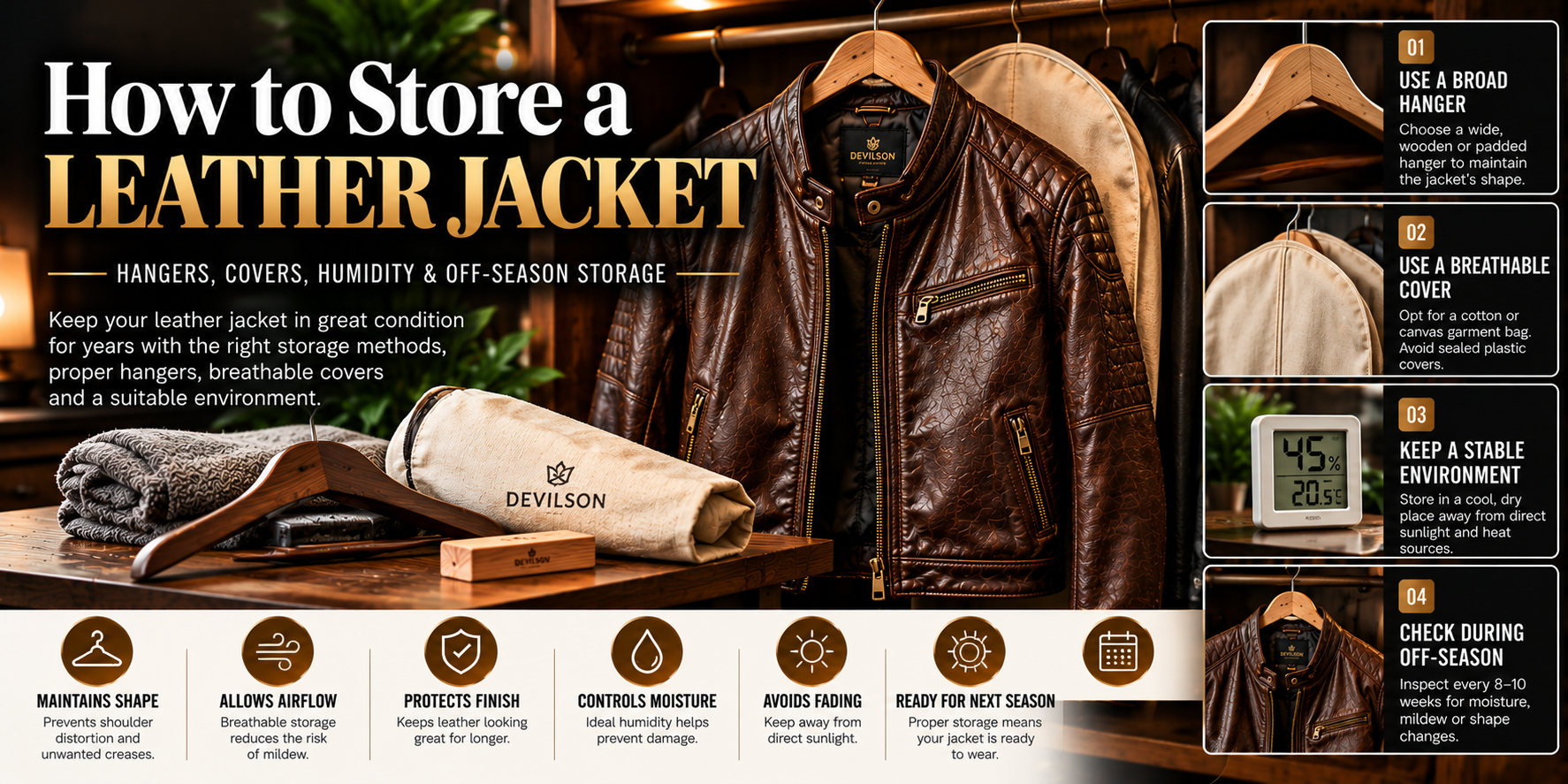
The key principles are simple: support the shoulders, allow airflow, avoid direct light and heat, keep moisture under control and avoid folding the jacket for extended periods.
Prepare the Jacket Before Storage
Remove Dirt, Sweat and Salt
Do not put a dirty jacket into long-term storage. Oils, sweat and salt left on the material can become more difficult to remove after months of inactivity.
Allow It to Dry Completely
If the jacket has recently been exposed to rain or cleaning moisture, let it air dry completely before putting it away.
Condition When Appropriate
If the manufacturer’s care instructions call for conditioning, complete that process before long-term storage and allow any product to absorb properly.
Empty the Pockets
Remove keys, wallets, gloves and other items so their weight does not distort pockets or place unnecessary stress on the leather.
Choose the Right Hanger for a Leather Jacket
The hanger supports the jacket’s shoulders for months at a time, so its shape matters. A narrow or unsuitable hanger can put unnecessary pressure on the shoulder area.
Use a Broad, Supportive Hanger
Choose a wide hanger that follows the natural shoulder line of the jacket.
- Broad wooden hangers are suitable for many leather jackets.
- Padded hangers can also provide useful shoulder support.
- The hanger should support the jacket rather than create sharp pressure points.
Avoid Wire Hangers
Thin wire hangers provide limited support and can create pressure points in heavier leather garments.
- Avoid thin wire hangers for long-term storage.
- Do not hang heavy leather from a weak or damaged hanger.
- Make sure the jacket sits naturally on the shoulder line.
Should You Use a Garment Cover?
A garment cover can protect the jacket from dust while still allowing appropriate airflow. The important distinction is between a breathable garment bag and an airtight plastic cover.
Choose Breathable Fabric
Cotton or canvas garment bags are suitable choices for storage because they allow air exchange around the jacket.
- Use a breathable cotton or canvas garment bag.
- Leave enough room around the jacket for airflow.
- Keep the cover clean and dry.
- Avoid sealed plastic bags for long-term leather storage.
Why You Should Avoid Sealed Plastic Storage
Breathable Storage
- Cotton or canvas garment bag.
- Air circulation around the jacket.
- Cool, dry and stable storage environment.
- Regular inspection during long storage.
Sealed Plastic
- Avoid airtight plastic garment bags for long-term storage.
- Do not trap a damp jacket inside plastic.
- Do not store leather where condensation can accumulate.
- Do not assume a sealed environment is automatically safer.
Where Should You Store a Leather Jacket?
The storage location matters almost as much as the hanger. Leather should be protected from unnecessary sunlight, temperature swings and excessive moisture.
Cool
Choose an indoor area away from radiators, heaters and other concentrated heat sources.
Dark
Keep the jacket away from prolonged direct sunlight, which can contribute to fading and finish changes.
Stable
Avoid locations with major temperature or moisture fluctuations such as damp basements or poorly controlled garages.
How Humidity Affects Leather Storage
Leather benefits from a reasonably stable environment. Excessive moisture can encourage mildew and unwanted discolouration, while extremely dry conditions can contribute to leather becoming dry and brittle.
Aim for a Stable Storage Environment
The existing leather-care guidance recommends keeping storage humidity roughly within the 40–55% range where it can be controlled. :contentReference[oaicite:1]{index=1}
Can You Fold a Leather Jacket?
Avoid Folding for Long Periods
For extended storage, hanging is generally preferable to folding because persistent folds can become permanent creases and place stress on the grain along the crease line. :contentReference[oaicite:2]{index=2}
If a jacket must be transported or temporarily folded, avoid creating sharp repeated creases and return it to a suitable hanger as soon as practical.
Long-term storage: hang it properly rather than keeping it folded in a drawer or box.
How to Store a Leather Jacket for Several Months
Before Putting It Away
Clean the jacket appropriately and make sure it is fully dry. Do not store leather with trapped sweat, salt or dirt. :contentReference[oaicite:3]{index=3}
Put It on a Proper Hanger
Use a broad hanger that follows the shoulder line and prevents unnecessary distortion.
Use a Breathable Cover
Cover the jacket with breathable cotton or canvas rather than sealing it inside plastic. :contentReference[oaicite:4]{index=4}
Choose the Right Location
Keep the jacket in a cool, dark and stable indoor environment rather than an attic, damp basement or temperature-changing garage. :contentReference[oaicite:5]{index=5}
Check It Periodically
For extended storage, inspect the jacket periodically, allow it to air and check its shape and condition. The source care guide recommends checking long-stored gear every 8–10 weeks. :contentReference[oaicite:6]{index=6}
Adjust Leather Storage With the Seasons
Air & Inspect
Take the jacket out of storage, inspect it and allow it to air before regular use.
Control Heat
Protect leather from prolonged direct sunlight and very hot storage locations.
Prepare for Moisture
Check the jacket before wetter riding conditions begin and make sure storage conditions remain dry.
Watch Salt & Dryness
Remove road salt promptly and monitor leather in cold, dry conditions.
Leather Jacket Storage Mistakes to Avoid
Store It Properly
- Use a broad supportive hanger.
- Use a breathable garment bag.
- Store it away from direct sunlight.
- Keep moisture under control.
- Inspect it during long storage.
Don’t Store It Like This
- Do not use a thin wire hanger.
- Do not seal leather inside plastic for months.
- Do not store it while damp.
- Do not leave it in direct sunlight.
- Do not fold it permanently for off-season storage.
Leather Jacket Storage Checklist
Remove dirt, sweat and salt before putting the jacket away.
Never place damp leather into a long-term storage bag.
Support the shoulders with a wide wooden or padded hanger.
Choose cotton or canvas rather than sealed plastic.
Keep the jacket cool, dark, dry and away from large temperature fluctuations.
Periodically check the jacket for dryness, moisture, pests, mildew and shape changes.
Leather Jacket Storage FAQs
What is the best way to store a leather jacket?
Should I hang or fold a leather jacket?
Can I store a leather jacket in a plastic bag?
What type of hanger is best for a leather jacket?
Where should I store my leather jacket?
What humidity is suitable for leather jacket storage?
Should a leather jacket be conditioned before storage?
How often should I check a leather jacket in storage?
Can I store a leather jacket in a wardrobe?
Hang It Right. Keep It Dry. Let It Breathe.
Long-term leather jacket storage is mainly about protecting the material from unnecessary pressure, moisture, heat and light. Use a broad hanger, a breathable cover and a cool, stable storage environment. Avoid prolonged folding and sealed plastic, and inspect the jacket periodically when it is stored for an extended period.