


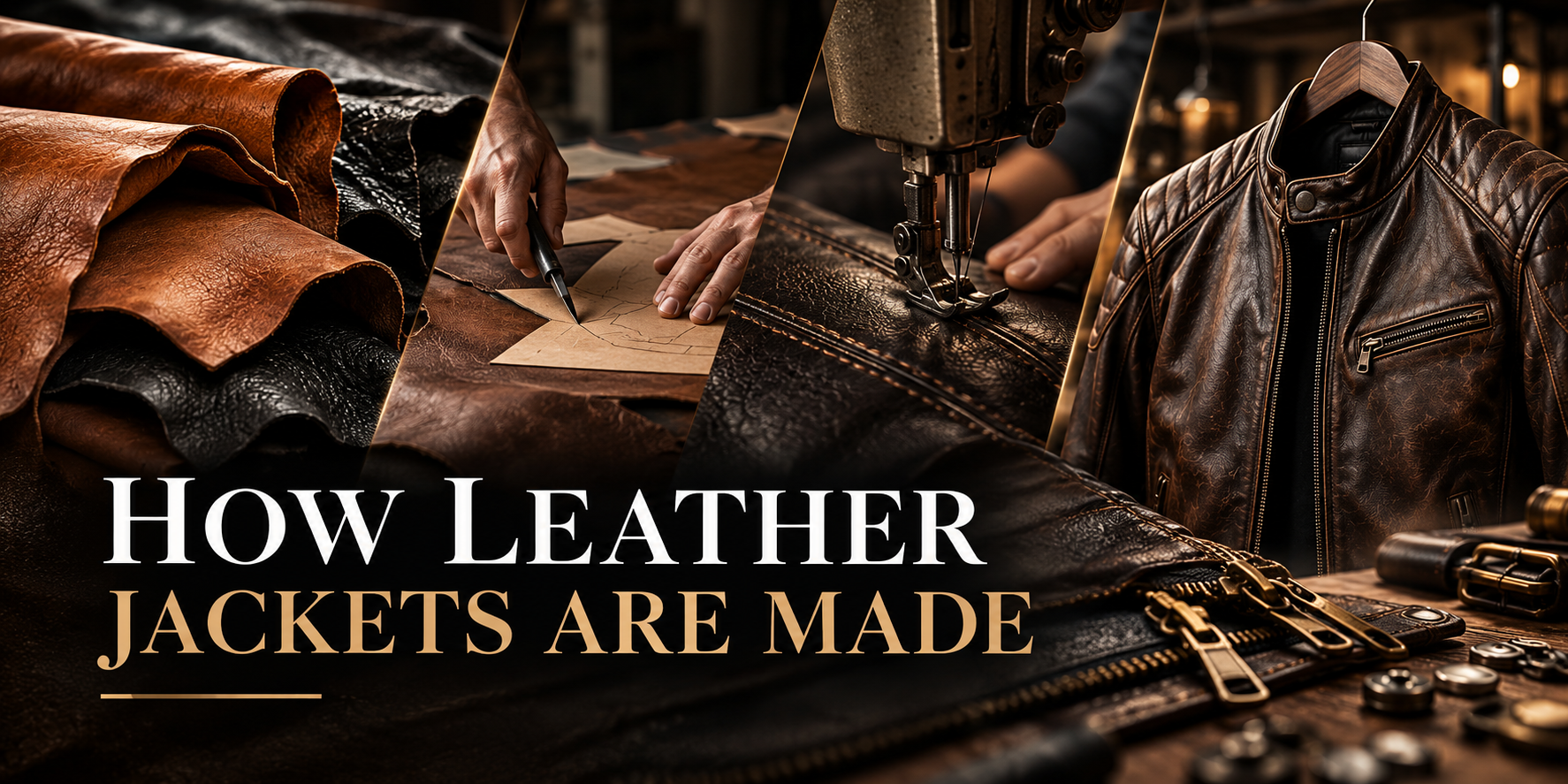
YKK Zippers, Stitching & Linings: How to Judge Leather Jacket Construction
Learn how to evaluate the construction details that often determine how a leather jacket feels, functions and holds up over time—from zippers and seams to lining, hardware and finishing.
What Makes a Well-Constructed Leather Jacket?
Leather quality gets most of the attention when people shop for a jacket, but the hide is only one part of the finished garment. Construction details can have a major effect on how the jacket performs during everyday wear.
Zippers, stitching, seams, lining, buttons, snaps, pocket construction and finishing all work together to create the completed jacket.
Leather Jacket Construction Checklist
How to Judge the Zippers
Zippers are among the most frequently used components on a leather jacket. The main zipper may be opened and closed repeatedly, while pocket and cuff zippers can also experience regular use.
When examining a jacket, check whether the zipper moves smoothly without catching, excessive resistance or visible misalignment.
- Smooth zipper movement
- Secure zipper attachment
- Correct alignment
- Strong zipper pulls
- Consistent installation
Why YKK Zippers Matter
Devilson’s published construction examples specify YKK zippers for primary and pocket closures. The brand’s material breakdown also identifies YKK hardware as part of its construction approach.
Examine the Stitching
Stitching joins the individual leather panels and helps hold the garment together. It is especially important around areas that experience repeated movement or tension.
Look closely at the stitching rather than simply checking whether a seam exists.
Where Should You Look for Reinforced Stitching?
Some parts of a jacket experience more movement and tension than others. These areas deserve closer inspection.
How to Judge the Jacket Lining
The lining affects how the jacket feels when worn and how the interior interacts with the leather shell.
Devilson’s published construction details describe quilted satin or thermal lining stitched flat against the shell rather than glued. :contentReference[oaicite:1]{index=1}
- Check how securely the lining is attached.
- Look for loose or exposed seams.
- Check whether the lining sits smoothly.
- Look for clean finishing around cuffs and openings.
Check Buttons, Snaps and Adjusters
Zippers aren’t the only hardware worth checking. Buttons, snaps, buckles and adjustable straps also contribute to the jacket’s functionality and finishing.
Don’t Ignore the Finishing Details
Finishing is where small details become visible. A well-presented jacket should have clean edges, controlled seams and properly installed components.
- Clean seam finishing
- No unnecessary loose threads
- Secure hardware attachment
- Clean zipper installation
- Properly finished lining
- Consistent overall appearance
What to Look for When Buying
| Construction Area | What to Inspect |
|---|---|
| Zippers | Smooth movement, alignment and secure attachment. |
| Stitching | Consistent seams, clean thread work and reinforcement. |
| Stress Points | Armholes, side seams, pockets and other high-use areas. |
| Lining | Secure attachment, smooth fit and clean finishing. |
| Hardware | Buttons, snaps, buckles and adjusters should function correctly. |
Construction Details Worth a Closer Look
Construction Details Matter
Devilson’s published material and construction details include YKK zippers, reinforced stitching at key seams, stitched lining, pre-washed leather panels and solid hardware options. :contentReference[oaicite:2]{index=2}
These details illustrate an important point for buyers: evaluating a leather jacket means looking beyond the surface leather and examining how the garment has been assembled.
Frequently Asked Questions
Look Beyond the Leather
A leather jacket’s outer hide is only part of the construction. Zippers, stitching, stress-point reinforcement, lining, hardware and finishing all contribute to the completed garment.
When comparing jackets, take a few extra minutes to inspect these details. They can tell you much more about the garment’s construction than a product photograph alone.