


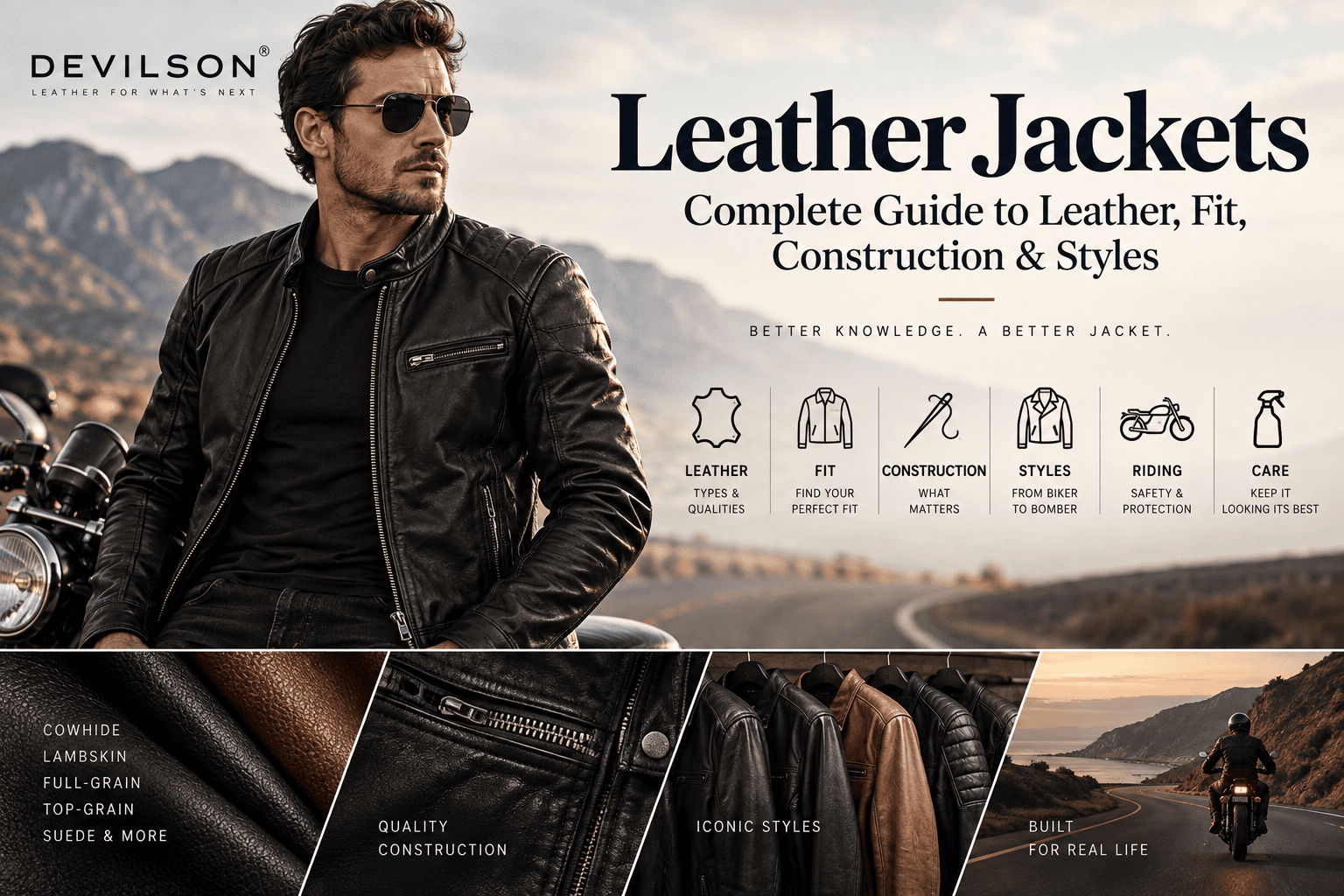
A good leather jacket should do more than look good. The right choice depends on the leather, how the jacket is constructed, how it fits your body, and what you actually plan to use it for.
For everyday fashion, a soft lambskin bomber may be the better choice. For regular motorcycle riding, a purpose-built motorcycle jacket with suitable protective construction is a more appropriate option. Understanding those differences makes it much easier to choose a jacket that feels right and performs well for its intended use.
What Is the Best Leather for a Jacket?
There is no single “best” leather for every jacket. Cowhide generally offers more structure and resistance to wear, while lambskin is lighter, softer, and more flexible. The better option depends on whether you prioritise durability, comfort, weight, or a particular style.
Leather type is only one part of the decision. The quality of the hide, tanning method, finishing, thickness, construction, and fit also affect how a jacket looks and performs.
Cowhide vs Lambskin
| Feature | Cowhide | Lambskin |
|---|---|---|
| Feel | Firm and structured | Soft and supple |
| Weight | Generally heavier | Generally lighter |
| Break-in | Usually takes longer | Usually breaks in quickly |
| Structure | Holds shape well | Drapes more naturally |
| Best suited to | Motorcycle, biker and rugged jackets | Fashion, bomber and lightweight jackets |
| Typical priority | Durability and structure | Comfort and softness |
Devilson currently describes its biker-jacket range as using lambskin for fitted silhouettes and cowhide around 1.0–1.2 mm for designs where greater weight and resistance are important. Its broader motorcycle-jacket range also includes full-grain and top-grain leather depending on the design.
Full-Grain, Top-Grain and Other Leather Terms
The phrase “real leather” does not tell you enough about what you are buying. Leather terminology describes different things, including the part of the hide used, its surface treatment, and its finish.
Full-Grain Leather
Full-grain leather retains the natural grain surface of the hide rather than being heavily corrected. This allows more of the original grain character to remain visible.
Leather Naturally defines full-grain leather as leather made from the top layer of the hide or skin, while its terminology guide explains that aniline leather has minimal surface finishing and retains visible natural grain characteristics.
Full-grain leather is often chosen when the buyer wants natural texture, durability and a material that develops character with use.
Top-Grain Leather
Top-grain leather also comes from the upper portion of the hide, but it may undergo surface treatment or correction to produce a more consistent appearance.
That can be useful when a manufacturer wants a cleaner, more uniform finish. A more uniform surface does not automatically mean a poor-quality jacket; the overall construction and intended use still matter.
Corrected-Grain Leather
Corrected-grain leather has been mechanically buffed or otherwise treated to reduce natural surface irregularities and create a more consistent finish. Leather Naturally notes that buffing removes part of the grain surface and can be followed by finishing to achieve a more uniform appearance.
Suede and Nubuck
Suede and nubuck have a softer, more tactile surface created through different finishing approaches.
They can be excellent choices for fashion jackets, but they should not be treated as interchangeable with a traditional smooth motorcycle leather simply because both are genuine leather.
How Should a Leather Jacket Fit?
A leather jacket should fit close enough to look structured without restricting normal movement. The shoulder seam should sit close to your natural shoulder, the sleeves should reach the wrist area, and the body should allow comfortable movement without excessive fabric or leather hanging around the torso.
The correct fit also depends on the jacket’s purpose.
A slim fashion jacket can be cut closer to the body. A motorcycle jacket needs enough room for riding posture and, where applicable, protective equipment underneath or built into the garment.
Check These Areas Before Buying
Shoulders:
The shoulder seams should not sit significantly beyond your natural shoulders. Excess width can make the jacket look poorly fitted.
Chest:
The jacket should close comfortably without pulling heavily across the chest.
Sleeves:
Sleeves should cover the wrist in your normal standing position. Motorcycle jackets may use longer sleeves to maintain coverage when your arms are extended.
Waist:
The lower body should sit securely without creating excessive pressure when you sit or move.
Arm movement:
Raise your arms, bend your elbows and rotate your shoulders. A good jacket should allow normal movement for its intended use.
Layering:
Think about what you will wear underneath. A very tight fashion jacket may work over a T-shirt but become uncomfortable with a sweater or protective layer.
Devilson says its sizing runs from XS through 5XL on its biker range and that custom sizing is available on relevant products. Its product pages also provide chest and sleeve measurements rather than relying only on generic size labels.
What Makes a Leather Jacket Well Constructed?
Leather quality matters, but construction determines how the material is turned into a usable garment.
Two jackets can both be made from genuine leather yet feel completely different because of differences in pattern cutting, stitching, hardware, lining and panel construction.
Stitching and Seams
Look at the points that receive the most stress: shoulders, armholes, side seams, pockets and sleeve openings.
Consistent stitching and properly finished seams are important because these areas experience repeated movement and tension.
Devilson states that its jackets use double-needle lock-stitch construction on relevant products and that skilled workers finish the jackets with YKK zippers and brass hardware.
Zippers and Hardware
A jacket’s zippers are used constantly, so the hardware should match the quality expected from the rest of the garment.
Pay particular attention to:
- Main front zipper
- Sleeve or cuff zippers
- Pocket zippers
- Zip pulls
- Snaps and buttons
Devilson’s current motorcycle and biker ranges prominently use YKK zippers, including on pockets, cuffs and front closures.
Lining
The lining affects comfort, ease of movement and seasonal usability.
A lightweight lining may work well for transitional weather, while a warmer removable or insulated lining may be more practical for colder conditions.
Do not judge lining quality purely by thickness. The important question is whether the lining suits the way you expect to wear the jacket.
Panel Design
A well-designed leather jacket uses panels strategically rather than simply adding seams for appearance.
On motorcycle jackets, panel placement can influence movement, fit and reinforcement. On fashion jackets, panel design may primarily shape the silhouette.
Leather Jacket Styles and Who They Suit
The right style depends on your wardrobe and intended use.
Biker Jackets
Biker jackets are typically defined by strong hardware, asymmetric or classic zip arrangements, structured silhouettes and a distinctly motorcycle-inspired appearance.
They work well for riders and for people who want a tougher everyday look.
Devilson has a dedicated biker-jacket category with classic motorcycle-inspired designs, including black leather styles, fringed jackets and other biker silhouettes.
Motorcycle Leather Jackets
A motorcycle jacket should be selected based on riding requirements, not just appearance.
Look for a fit that works in riding position, durable outer construction, secure closures and appropriate protective features. Devilson’s motorcycle-jacket collection includes products designed around riding use, with some models featuring removable protectors and connection zips for trousers.
Leather Bomber Jackets
Leather bombers are generally easier to integrate into casual wardrobes.
Their ribbed hems, simpler construction and cleaner silhouettes make them suitable for everyday wear, travel and casual outfits.
Devilson’s men’s leather bomber collection includes both classic and contemporary designs, including cognac and brown leather styles.
Leather Coats
Leather coats offer greater coverage and a longer silhouette than traditional waist-length jackets.
They can be particularly useful when warmth, layering and a more formal appearance matter more than motorcycle-specific styling.
Devilson currently maintains a dedicated men’s leather-coat category covering longer leather outerwear.
Racing Jackets and Moto-Inspired Styles
Racing-inspired leather jackets often feature a close fit, panelled construction, contrasting colours and motorsport-style details.
Some products are primarily fashion pieces, while dedicated motorcycle riding gear may include certified protective components. Those purposes should not be confused.
Is a Leather Jacket Suitable for Motorcycle Riding?
A leather jacket can be an appropriate material for motorcycle clothing, but a fashion leather jacket should not automatically be considered protective riding equipment.
For motorcycle use, evaluate the complete garment rather than the leather alone. Important factors include abrasion resistance, seam strength, fit, impact protectors and certification.
The European Commission notes that motorcycle protective clothing is designed to help reduce injuries associated with road impacts and abrasion, and identifies protective systems for areas including the shoulders, elbows and back.
For riders purchasing protective equipment in markets where the European PPE framework applies, CE marking indicates conformity with applicable EU PPE legislation. Motorcycle protective garments are covered by standards within the EN 17092 family.
A useful buying rule is simple:
Do not assume that “genuine leather” means “motorcycle protective.” Check the garment’s actual certification and protective features.
What Features Should You Look for in a Motorcycle Leather Jacket?
When the jacket is intended for riding, consider the following:
Abrasion-resistant construction
The outer material and garment construction should be suitable for the intended riding environment.
Impact protection
Check whether the jacket includes suitable protectors and where those protectors are positioned.
Secure fit
A jacket should remain correctly positioned during movement rather than becoming loose or riding up excessively.
Strong seams
Structural seams are especially important because they must withstand movement and stress.
Secure closures
The front, cuffs and pockets should close reliably.
Rider ergonomics
The jacket should allow practical movement in the riding position.
Certification
Where protective certification is required or expected, check the actual label and documentation rather than relying on marketing language.
No protective garment can eliminate every motorcycle injury risk. Government motorcycle-clothing guidance also warns buyers not to assume protective clothing provides complete protection against all injuries.
How to Choose a Leather Jacket for Everyday Fashion
For everyday wear, start with your wardrobe rather than the trend of the moment.
A black leather biker jacket is versatile and pairs easily with jeans, boots and casual clothing. A brown or cognac bomber can create a softer, more refined look. A longer leather coat can work better when you want additional coverage or a more formal silhouette.
Then consider the leather.
Choose lambskin when softness, flexibility and a lightweight feel are major priorities. Consider cowhide when you want a firmer structure and a more substantial feel.
The best jacket is the one whose material, cut and construction match how often you will actually wear it.
How to Tell Whether a Leather Jacket Is Worth the Price
Price alone does not tell you whether a leather jacket is good.
Look at what the price represents:
- Type and quality of leather
- Hide selection
- Leather thickness where relevant
- Stitching and construction
- Hardware quality
- Lining
- Pattern and fit
- Protective components, if applicable
- Finishing and detailing
- Manufacturing and quality-control processes
A cheaper jacket can be excellent value when its construction matches its intended use. Likewise, an expensive jacket is not automatically better simply because it carries a higher price.
How Should You Care for a Leather Jacket?
Leather generally benefits from sensible storage and cleaning rather than excessive treatment.
Keep the jacket away from prolonged direct heat. If it becomes wet, allow it to dry naturally rather than placing it directly against a radiator or using intense heat.
Use cleaning and conditioning products appropriate to the specific leather and finish. Aniline, suede, nubuck and heavily finished leather may require different care methods.
Avoid applying an unfamiliar product to the entire jacket immediately. Test it on a small, inconspicuous area first and follow the manufacturer’s care instructions.
Proper care can help preserve the appearance and usability of a well-made leather garment over time. Leather Naturally notes that leather goods can be repairable and can remain usable for many years when well made and maintained.
Which Leather Jacket Should You Choose?
Your best choice depends on what you need the jacket to do.
| Your Priority | Better Starting Point |
|---|---|
| Soft, lightweight everyday wear | Lambskin fashion jacket |
| Structured, rugged look | Cowhide jacket |
| Motorcycle riding | Purpose-built motorcycle jacket |
| Classic motorcycle style | Biker jacket |
| Casual everyday styling | Leather bomber |
| More coverage and formal styling | Leather coat |
| Motorsport-inspired appearance | Racing or Moto-inspired jacket |
For motorcycle riders, Devilson’s [leather motorcycle jacket collection] offers riding-focused options, while its [biker jacket collection] is better suited to classic biker styling. For casual wear, the [men’s leather bomber collection] provides a different silhouette and use case.
The important distinction is not simply “which jacket looks best?” It is which leather, construction and fit make sense for the way you will use it?
Frequently Asked Questions
Is real leather better than faux leather?
Real leather and synthetic leather are different materials with different characteristics. Real leather comes from animal hides, while faux leather is generally made from synthetic materials. The better choice depends on your priorities, including feel, durability, appearance, maintenance and material preference.
Is cowhide or lambskin better for a leather jacket?
Cowhide is generally a better fit when you want a more substantial, structured jacket and greater resistance to wear. Lambskin is usually preferred when softness, light weight and flexibility are more important.
Is full-grain leather the best leather?
Full-grain leather retains the natural grain surface and is often valued for its natural appearance and character. However, “best” depends on the application. A buyer should consider leather type, finishing, construction and intended use rather than choosing based on one label alone.
Should a leather jacket fit tight?
A leather jacket should fit close without restricting movement. The correct amount of room depends on the jacket’s intended use and what you plan to wear underneath it.
Can I use a fashion leather jacket for motorcycle riding?
You should not assume that a fashion leather jacket provides motorcycle-level protection. For riding, check the garment’s protective construction, impact protection and applicable certification rather than relying only on the fact that it is made from leather.
How long can a good leather jacket last?
A well-made leather jacket can remain wearable for many years when it is properly cared for, stored and repaired when necessary. Longevity varies considerably by leather, construction, frequency of use and maintenance.
Does leather soften over time?
Yes. Many leather jackets become more supple with wear as the material flexes and develops character. The amount of change depends on the leather, finish and construction.
What colour leather jacket is most versatile?
Black is usually the easiest starting point because it works across casual and biker-inspired outfits. Brown, tan and cognac are good alternatives when you want a warmer or more relaxed appearance.
Final Buying Advice
A leather jacket is worth evaluating as a complete garment rather than a piece of leather with a brand name attached to it.
Start with your intended use. Choose the leather based on the balance you need between softness, weight, structure and durability. Then check fit, construction, hardware and lining.
For motorcycle use, go one step further and verify the actual protective features and certification of the garment.
That approach will help you choose a jacket that is not only attractive when it arrives, but also makes sense for how you intend to wear it.
A Practical Rule
Choose the purpose first, the leather second, the fit third, and the styling details last.
That order usually leads to a much better purchase than choosing a jacket simply because it looks good in a photograph.