


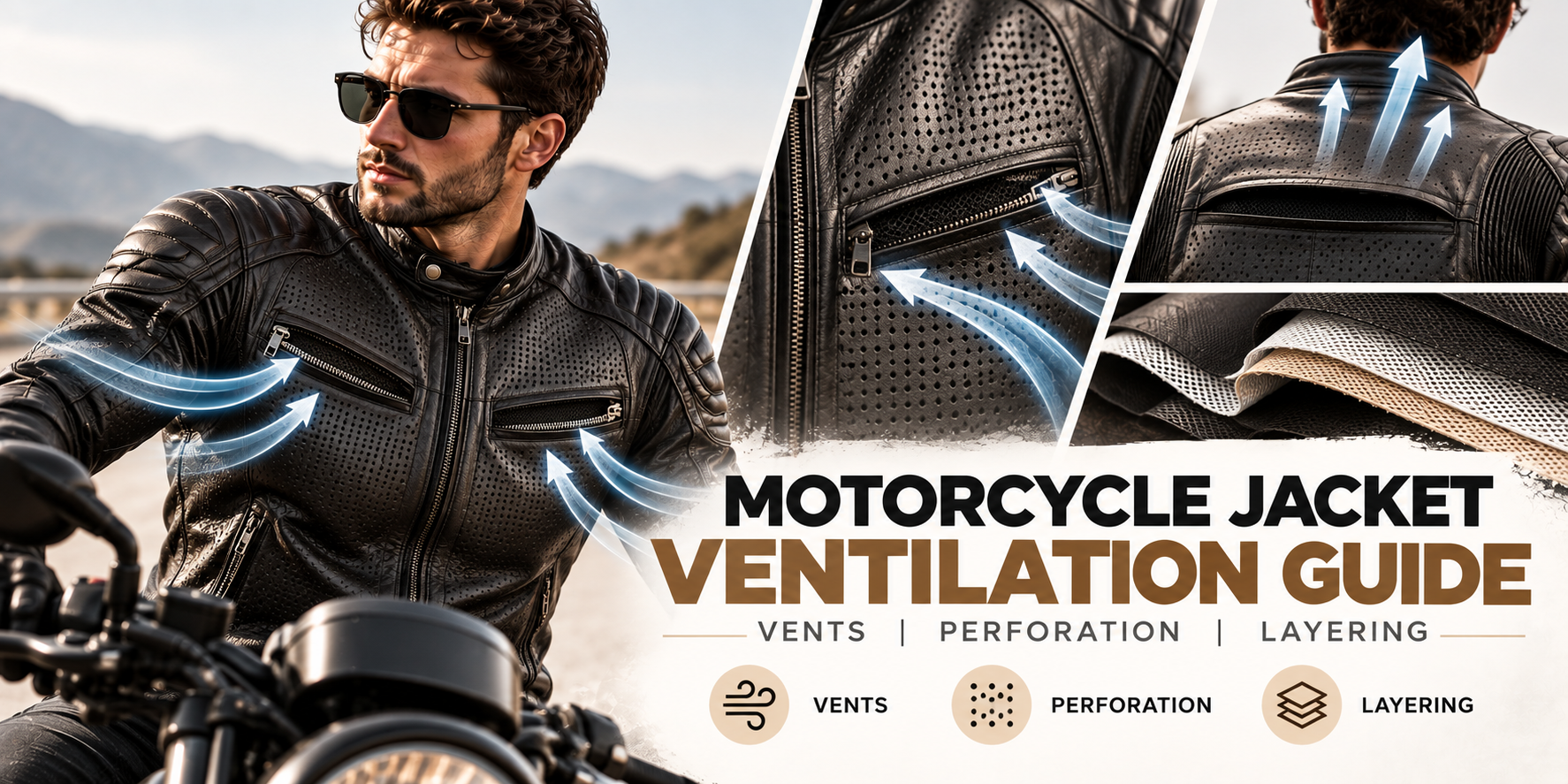
Motorcycle Jacket Ventilation Guide: Vents, Perforation & Layering
Learn how motorcycle jacket ventilation works, how perforated leather affects airflow, and how layering can help you choose the right setup for different riding conditions.
Why Ventilation Matters on a Motorcycle Jacket
Motorcycle riding can expose you to changing temperatures, road speeds and airflow conditions. A leather jacket that feels comfortable during cooler weather may feel considerably warmer when temperatures rise or when riding through slow-moving traffic.
Motorcycle jacket ventilation is designed to help manage airflow through the garment. Depending on the design, ventilation may come from dedicated vents, perforated leather panels, rear openings or a combination of different features.
Main Types of Motorcycle Jacket Ventilation
What Are Fixed Motorcycle Jacket Vents?
Fixed vents are ventilation openings permanently incorporated into the jacket. They allow air to enter or move through the garment without requiring the rider to remove or adjust a separate panel.
Their effectiveness depends partly on placement. Openings positioned in areas exposed to incoming airflow can behave differently from vents positioned in areas where airflow is naturally limited.
What to Look For
- Vent placement around the torso
- Openings positioned to receive airflow
- Properly finished vent edges and closures
- Ventilation appropriate for your typical riding conditions
Adjustable Ventilation for Changing Weather
Some motorcycle jackets allow ventilation openings to be opened or closed. This provides greater flexibility when temperatures change throughout a ride.
When conditions become warmer, opening available vents can increase airflow. During cooler conditions, closing them can reduce direct airflow through those openings.
Perforated Motorcycle Leather Jackets
Perforated leather contains many small openings across selected sections of the jacket. These openings allow air to pass through the leather rather than relying only on larger dedicated vents.
Perforation can be particularly useful in warmer riding conditions because airflow can be distributed across a broader section of the garment.
Distributed Airflow
Small perforations can distribute airflow across selected panels.
Warm Weather
Perforation is commonly used when increased airflow is desired.
Panel Placement
The amount and location of perforation influence airflow through the jacket.
Why Rear Vents Matter
Airflow works as a system rather than simply entering through the front of a jacket. Rear vents can provide an exit point for warm air as fresh air enters through other openings.
This is why ventilation on both the front and rear of a jacket can be important when evaluating the overall design.
Vents vs. Perforation: What’s the Difference?
| Feature | Vents | Perforation |
|---|---|---|
| Opening Type | Larger dedicated openings | Many small openings |
| Adjustability | May be adjustable | Usually permanent |
| Airflow | Concentrated around vent locations | Distributed across perforated panels |
| Climate Use | Useful for changing conditions | Often suited to warmer conditions |
How Layering Works With Motorcycle Jacket Ventilation
Ventilation is only one part of temperature management. What you wear underneath the jacket can change how warm or cool the overall setup feels.
Choosing Ventilation for Different Climates
Prioritize Airflow
Consider perforated panels and well-positioned ventilation openings when warm-weather airflow is a priority.
Choose Adjustability
Jackets with adjustable vents can provide greater flexibility when temperatures change throughout the day.
Control Airflow
Reduced ventilation combined with suitable layering can help create a warmer riding setup.
What to Check Before Buying a Ventilated Motorcycle Jacket
Frequently Asked Questions
Match Ventilation to Your Riding Conditions
Motorcycle jacket ventilation can come from dedicated vents, perforated leather, rear openings or a combination of these features.
The right setup depends on your climate, riding conditions, preferred airflow and the layers you plan to wear underneath the jacket.