


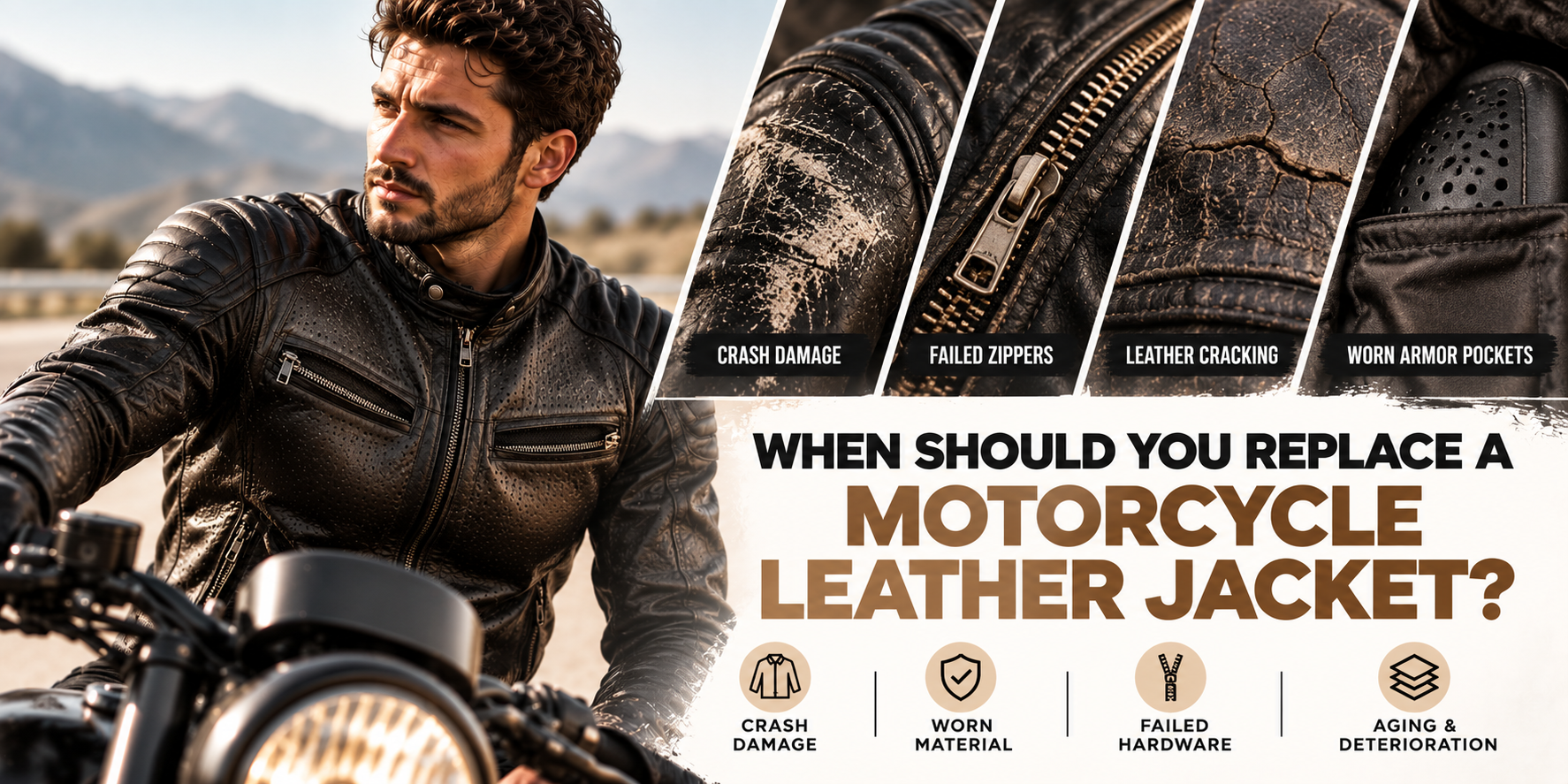
When Should You Replace a Motorcycle Leather Jacket?
Learn how to identify crash damage, worn leather, compromised seams, failed hardware, damaged armor pockets and other signs that a motorcycle leather jacket may need replacement.
How Long Should a Motorcycle Leather Jacket Last?
A motorcycle leather jacket does not have one universal replacement date. Its condition depends on how often it is worn, how it is stored, how it is maintained and whether it has experienced a crash or significant abrasion.
Instead of replacing a jacket based only on age, riders should regularly inspect the leather, stitching, closures, armor pockets and other construction points.
Some Damage Should Not Be Ignored
Visible damage after a crash, major abrasion, compromised stitching, damaged armor pockets or significant leather deterioration can affect the jacket’s intended construction. Inspect these areas carefully before deciding to continue using the jacket.
1. Crash or Abrasion Damage
A crash can expose a motorcycle jacket to forces and abrasion that ordinary everyday wear does not produce. Even when damage appears limited from the outside, the jacket should be carefully inspected.
Scraped or Abraded Leather
Look for areas where the outer leather has been heavily scraped, worn through or visibly compromised.
Torn Panels
Tears, large cuts or separated leather panels require careful evaluation before the jacket is used again.
Damaged Stitching
Check seams and high-stress areas for broken, pulled or separated stitching.
Post-Crash Inspection
Do not judge a crash-damaged jacket only by its appearance. Inspect the complete construction and protective components.
Check the Seams and Stress Points
Stitching holds the individual leather panels together, making seams one of the most important areas to inspect as a jacket ages.
2. Inspect the Armor and Armor Pockets
Protective inserts and the pockets that hold them should remain properly positioned and securely constructed. Inspect both the protectors and their surrounding compartments.
3. Watch for Leather Cracking and Deterioration
Leather can change with age, exposure and maintenance history. Repeated flexing, drying, moisture exposure, heat and inadequate conditioning can contribute to visible deterioration.
Surface Cracking
Examine heavily flexed areas such as elbows, sleeves and waist sections for progressive cracking.
Excessive Dryness
Leather that has become unusually dry, brittle or visibly degraded deserves closer inspection.
Peeling or Flaking
Significant surface deterioration should not be confused with normal patina or cosmetic changes.
Structural Condition
Consider whether deterioration affects only appearance or whether the leather and construction have become compromised.
4. Check Zippers, Snaps and Closures
Hardware is another area where wear becomes noticeable over time. Primary closures should operate correctly and remain securely attached to the jacket.
5. Inspect the Lining and Internal Construction
The inside of the jacket deserves the same attention as the outer shell. Look for torn lining material, loose stitching and damaged internal pockets.
- Check for torn or heavily worn lining.
- Inspect stitching around internal armor pockets.
- Look for detached sections of lining.
- Check pocket openings and closures.
- Inspect the jacket after significant repairs to ensure construction remains appropriate for its intended use.
Motorcycle Jacket Inspection Checklist
Does an Older Jacket Automatically Need Replacement?
Not necessarily. Age alone does not describe the complete condition of a leather motorcycle jacket. Storage, frequency of use, maintenance, exposure and previous damage can all influence its current state.
A regular inspection can reveal problems that are more relevant than the jacket’s manufacturing date alone.
When Replacement Should Be Considered
After Significant Crash Damage
A crash can compromise materials and construction even when the visible damage appears limited.
When Major Seams Are Compromised
Extensive separation, tearing or failed stitching should receive immediate attention.
When Leather Has Deteriorated
Severe cracking, brittleness or structural deterioration can indicate that continued use needs reconsideration.
When Construction No Longer Functions Properly
Failed closures, damaged armor pockets or serious internal deterioration are signs that the jacket needs professional evaluation or replacement.
Frequently Asked Questions
Inspect Condition — Not Just Age
A motorcycle leather jacket does not have a universal expiration date. Its condition can change because of crashes, abrasion, leather deterioration, compromised seams, worn armor pockets and failed hardware.
Regular inspection helps identify problems early and gives riders a clearer basis for deciding whether a jacket needs repair, professional evaluation or replacement.