


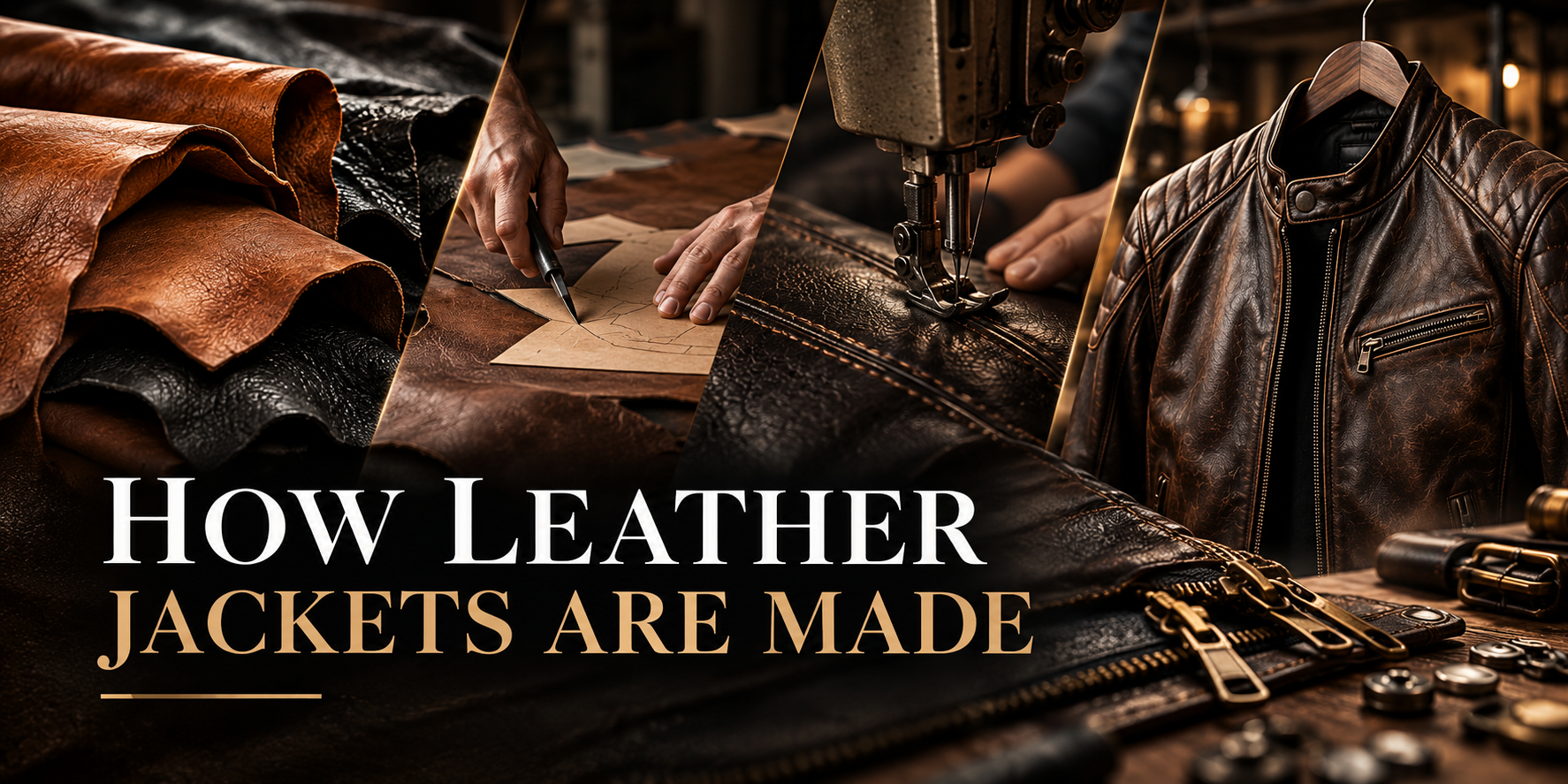
How Leather Jackets Are Made: From Hide Selection to Final Stitching
Explore the complete leather jacket manufacturing process, from selecting and preparing hides to cutting, stitching, hardware installation, finishing and final quality control.
How Are Leather Jackets Made?
A leather jacket is not made from leather alone. The finished garment is the result of several connected stages including hide selection, leather preparation, pattern development, cutting, panel matching, stitching, hardware installation, lining, finishing and quality control.
The process begins long before a zipper is installed. The quality of the finished jacket depends on how the leather is selected, how efficiently the hide is cut, how individual panels are joined and how carefully the garment is inspected.
The Leather Jacket Manufacturing Process
A typical leather jacket production workflow can be simplified into these major stages:
Hide Selection
The manufacturing process begins with selecting the leather appropriate for the jacket.
Manufacturers may work with cowhide, lambskin, goatskin or sheepskin depending on the intended design and characteristics required from the finished garment.
Leather Preparation
Before leather reaches the garment manufacturer, hides go through tanning and other processing stages.
Leather production can involve cleaning, tanning, retanning, milling and finishing. Splitting and shaving may also be used to control thickness for a particular application.
Leather Is More Than a Surface
Tanning and finishing influence the leather’s final characteristics, including its appearance, feel and suitability for different products.
Leather Inspection and Grading
Once the leather is ready, it is inspected before cutting.
Manufacturers may evaluate grain consistency, surface marks, thickness, stretch, color, finish and usable area.
Pattern Development
The jacket design is converted into individual patterns that define the shape and dimensions of each component.
Cutting the Leather Panels
Once the patterns are ready, the leather is cut into individual components.
Depending on the production setup, manufacturers may use manual cutting tools, cutting dies, specialized machinery or digital cutting systems.
Panel Matching
After cutting, individual leather panels are organized and matched. Manufacturers may consider color, grain appearance, texture, thickness and stretch when positioning visible panels.
Preparing Panels for Assembly
Individual panels can require additional preparation before permanent assembly.
- Edge preparation
- Skiving
- Folding
- Reinforcement
- Pocket preparation
- Zipper positioning
Stitching the Leather Panels
The cut leather panels are joined through stitching. Depending on the jacket, assembly may include front panels, back panels, shoulders, side seams, sleeves, collar, pockets, cuffs and waist sections.
Stitching Is a Structural Part of the Jacket
Areas such as shoulders, armholes, elbows, cuffs, pocket openings and zipper sections experience repeated movement. Consistent stitching is therefore important to the overall construction.
Installing Zippers and Hardware
Zippers and other hardware are installed during the appropriate assembly stages.
- Main front zipper
- Sleeve zippers
- Pocket zippers
- Snaps and buttons
- Buckles and adjusters
Adding the Jacket Lining
The leather shell is combined with a suitable lining to improve comfort and garment functionality.
Edge Finishing and Surface Treatment
Once the main construction is complete, the jacket receives finishing work.
- Edge treatment
- Surface cleaning
- Buffing
- Conditioning
- Loose-thread removal
- Hardware cleaning
- Final appearance inspection
Quality Control
The completed jacket is inspected before it is packaged and shipped.
Quality control can cover leather, stitching, zippers, pockets, lining, hardware, sleeves, collar, dimensions and overall appearance.
What Is Checked During Final Quality Control?
| Inspection Area | What Is Checked |
|---|---|
| Leather | Surface quality, visible defects and consistency. |
| Stitching | Loose threads, skipped stitches and seam alignment. |
| Zippers | Smooth operation and correct installation. |
| Overall Appearance | Color, finish and presentation. |
Frequently Asked Questions
From Hide to Finished Jacket
A leather jacket is the result of a multi-stage manufacturing process—not simply a piece of leather cut into a jacket shape.
The process starts with selecting and preparing appropriate leather, continues through pattern development and precise cutting, and then moves into panel matching, stitching, hardware installation, lining and finishing.
The final stage is quality control, where the completed jacket is checked for construction, appearance and functionality.
Good leather matters. Good construction matters. And the way those two elements are brought together is what turns leather into a finished jacket.