


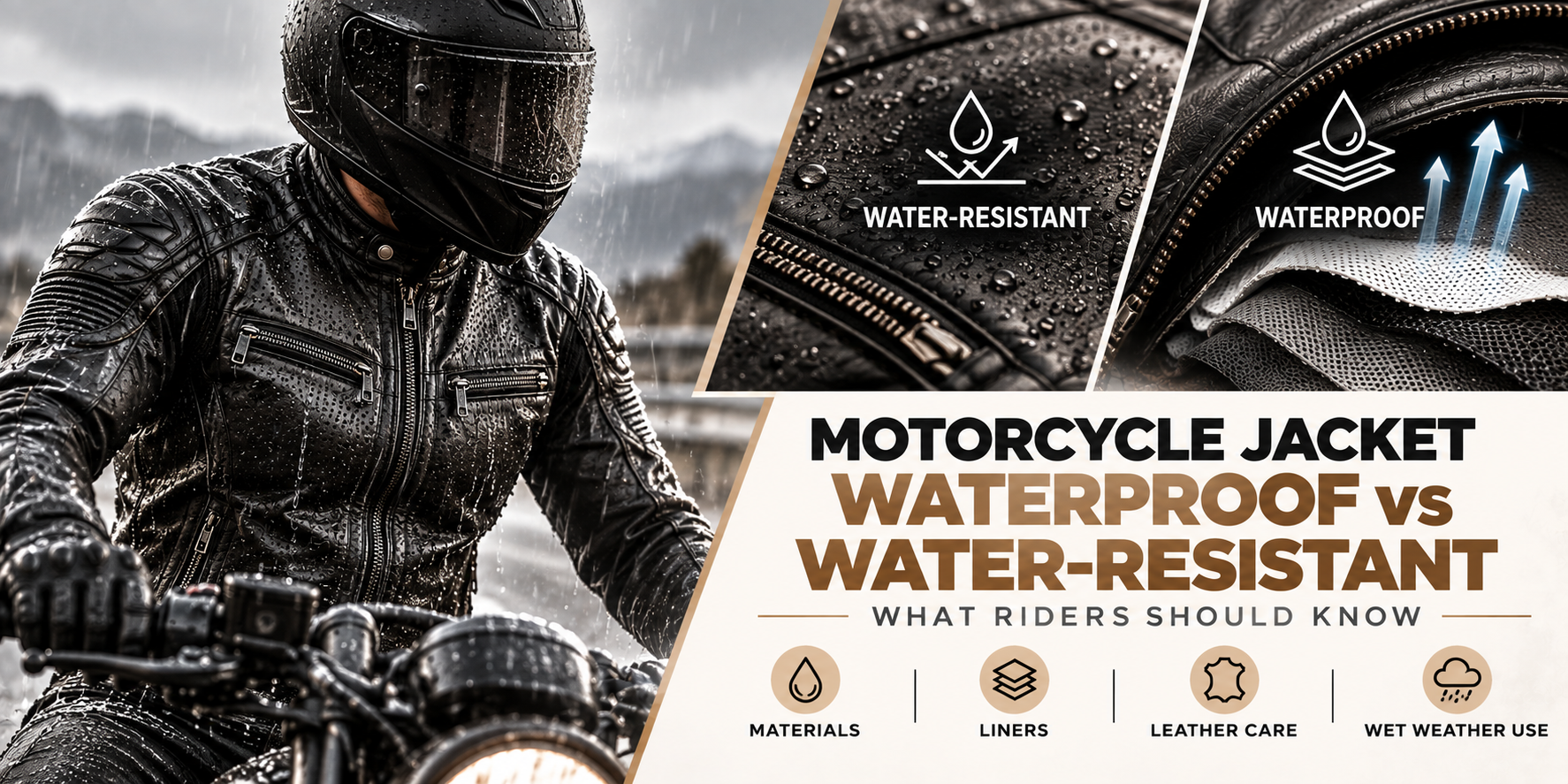
Motorcycle Jacket Waterproof vs Water-Resistant: What Riders Should Know
Understand the difference between waterproof and water-resistant motorcycle jackets, how leather behaves in rain, and what construction features matter when riding in wet conditions.
Waterproof vs Water-Resistant: Why the Difference Matters
Motorcycle riders encounter different types of wet weather, from light drizzle during a commute to sustained rainfall on a long-distance ride. A jacket’s ability to handle moisture depends on its materials, construction and intended design.
The terms waterproof and water-resistant are often used interchangeably, but they describe different levels of protection from water.
Waterproof vs Water-Resistant at a Glance
Helps Resist Moisture
A water-resistant jacket can help shed or delay water penetration, depending on the material, finish and construction.
Designed for Greater Water Protection
A waterproof garment uses construction and materials specifically intended to limit water from reaching the inside.
How Leather Motorcycle Jackets Behave in Rain
Leather is a natural material and should not automatically be treated as completely waterproof. Its behavior when exposed to water depends on the leather type, tanning, finishing treatment and overall garment construction.
Light exposure to moisture may be handled differently from prolonged heavy rainfall. Repeated or extended exposure can also increase the importance of proper drying and leather care.
What Can Affect Water Resistance?
- Type and thickness of leather
- Surface finishing or treatment
- Seams and stitching
- Zippers and closures
- Lining and internal construction
- Condition and maintenance of the leather
The Role of Leather Finishes
The surface finish applied to leather can influence how water behaves when it reaches the outer surface. Some finishes encourage water to bead and run off rather than immediately soaking into the material.
However, a surface finish alone does not necessarily make an entire motorcycle jacket waterproof. Water can still enter through seams, openings, zippers or other construction points.
Why the Inner Liner Matters
A motorcycle jacket is more than its outer leather shell. The internal liner, membrane or additional layer can influence how moisture behaves inside the garment.
When evaluating a jacket for wet-weather use, look beyond the leather itself and examine how the entire garment is constructed.
When Is a Waterproof Shell More Appropriate?
Riders who regularly travel through prolonged rain may need a garment specifically designed for wet-weather protection rather than relying solely on a leather jacket’s surface treatment.
Frequent Heavy Rain
A dedicated waterproof layer can be more appropriate for riders who frequently encounter sustained rainfall.
Long-Distance Touring
Long rides can expose the rider to changing weather, making dedicated rain protection useful as part of a broader riding system.
Commuting in Unpredictable Weather
Riders who cannot easily avoid changing weather may benefit from carrying a dedicated waterproof outer layer.
Planned Wet-Weather Riding
If rain is expected during the ride, dedicated rain protection can be planned in advance rather than relying only on leather treatment.
Waterproof vs Water-Resistant Motorcycle Jackets
| Feature | Water-Resistant | Waterproof |
|---|---|---|
| Main Purpose | Helps resist or delay water penetration | Designed for greater protection against water |
| Rain Exposure | Better suited to limited or lighter exposure | More appropriate for sustained wet conditions |
| Construction | Depends heavily on leather and surface finish | Usually involves dedicated weather-protection construction |
| Best Approach | Maintain and protect the leather appropriately | Follow the manufacturer’s care and usage instructions |
What to Do If Your Leather Jacket Gets Wet
If a leather motorcycle jacket becomes wet, proper drying is important. Avoid treating wet leather as if it were ordinary synthetic clothing.
Gently remove surface water without aggressively rubbing the leather.
Allow the jacket to dry naturally in a suitable ventilated area.
Avoid direct high heat that can affect leather and its finish.
Use the care products and cleaning methods appropriate for the leather.
What to Check Before Buying
Frequently Asked Questions
Choose Weather Protection Based on How You Ride
Water-resistant and waterproof are not interchangeable terms. Leather behavior, surface treatment, seams, zippers, liners and dedicated waterproof construction all contribute to how a motorcycle jacket handles wet conditions.
For occasional light rain, water resistance may be sufficient; riders expecting prolonged or frequent rainfall should evaluate dedicated waterproof construction or an appropriate rain shell.