


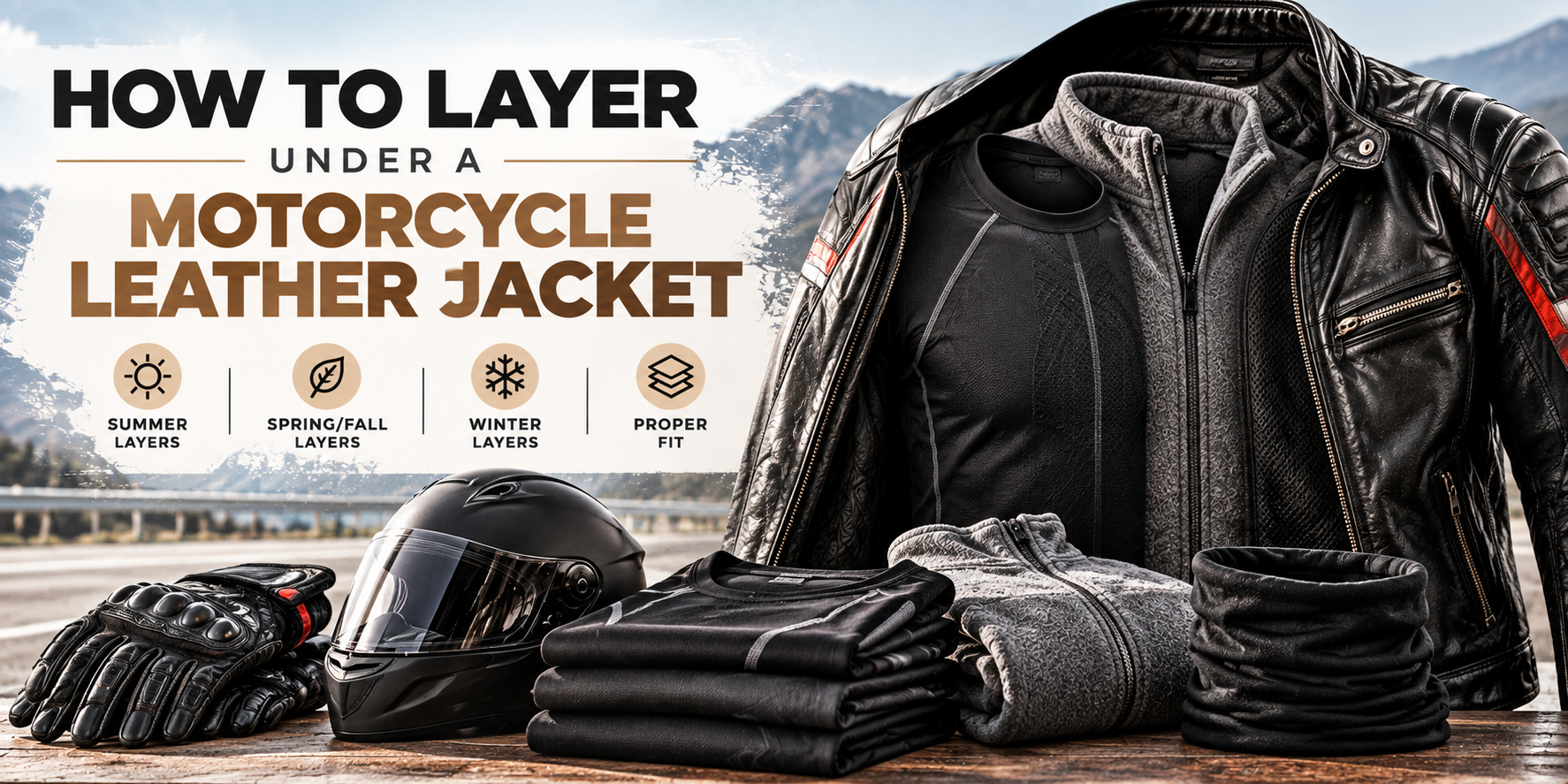
How to Layer Under a Motorcycle Leather Jacket
Learn how to choose base layers, thermal layers and seasonal clothing while maintaining armor clearance, mobility and a comfortable riding fit.
Why Layering Matters Under a Motorcycle Jacket
What you wear underneath a motorcycle leather jacket can affect comfort, temperature control, mobility and the way the jacket sits while riding.
The goal is not simply to add more clothing. A good layering system should provide the warmth or moisture management you need without creating excessive bulk or interfering with the jacket’s protective components.
The Three-Layer Approach
Base Layer
The layer closest to your skin should provide comfort and help manage moisture during the ride.
Thermal Layer
An insulating layer can add warmth during colder rides without requiring an oversized outer jacket.
Motorcycle Jacket
The leather jacket remains the outer riding layer, providing the structure and protective features designed into the garment.
Choose the Right Base Layer
The base layer sits directly against the body, so comfort is especially important. A suitable riding base layer should avoid creating excessive bulk beneath the jacket.
Keep Enough Clearance Around the Armor
Adding clothing underneath a motorcycle jacket can change how the jacket fits around its protective components. Avoid layering so much that the jacket becomes excessively tight or restricts normal movement.
Summer Layering Under a Leather Motorcycle Jacket
In warmer conditions, the objective is usually to minimize unnecessary insulation and keep the clothing underneath the jacket lightweight.
Lightweight Base
Start with a thin, comfortable base layer that does not add unnecessary insulation.
Avoid Excess Bulk
Extra layers can increase heat retention and make the jacket feel tighter.
Consider Ventilation
Ventilation features in the jacket can influence how comfortable your layering system feels in warm weather.
How to Layer for Cold-Weather Riding
Cold-weather layering generally requires more insulation, but adding multiple thick garments is not always the best approach. The combined layers still need to fit comfortably beneath the motorcycle jacket.
Avoid an Over-Tight Fit
One of the most common layering problems is choosing too many thick layers beneath a jacket that was originally fitted for a lighter base. This can change the way the jacket moves and sits while riding.
- Make sure the zipper closes without excessive strain.
- Check that shoulder and elbow areas remain comfortable.
- Ensure the sleeves do not become excessively restrictive.
- Check the jacket while seated in your riding position.
- Avoid adding so much bulk that normal movement becomes restricted.
Layering Guide by Season
| Riding Condition | Suggested Approach | Main Priority |
|---|---|---|
| Warm Weather | Lightweight base layer | Comfort and moisture management |
| Mild Weather | Base layer plus light mid-layer if needed | Flexibility and temperature control |
| Cold Weather | Base layer plus thermal insulation | Warmth without excessive bulk |
| Changing Conditions | Adaptable removable layers | Easy adjustment during the ride |
Test Your Layers Before Riding
Close the jacket completely and check for excessive pressure.
Check the fit in your normal riding posture.
Confirm that your shoulders and elbows can move naturally.
Make sure added layers do not create uncomfortable pressure or interfere with the intended positioning of protective components.
Before You Ride
Frequently Asked Questions
Layer for Comfort Without Compromising Fit
The right layers should work with your motorcycle jacket rather than fighting against its fit. Start with a comfortable base layer, add thermal insulation when the weather requires it, and check the complete setup in your normal riding position.
The goal is a balanced system that provides seasonal comfort while preserving mobility and appropriate clearance around the jacket’s protective components.