


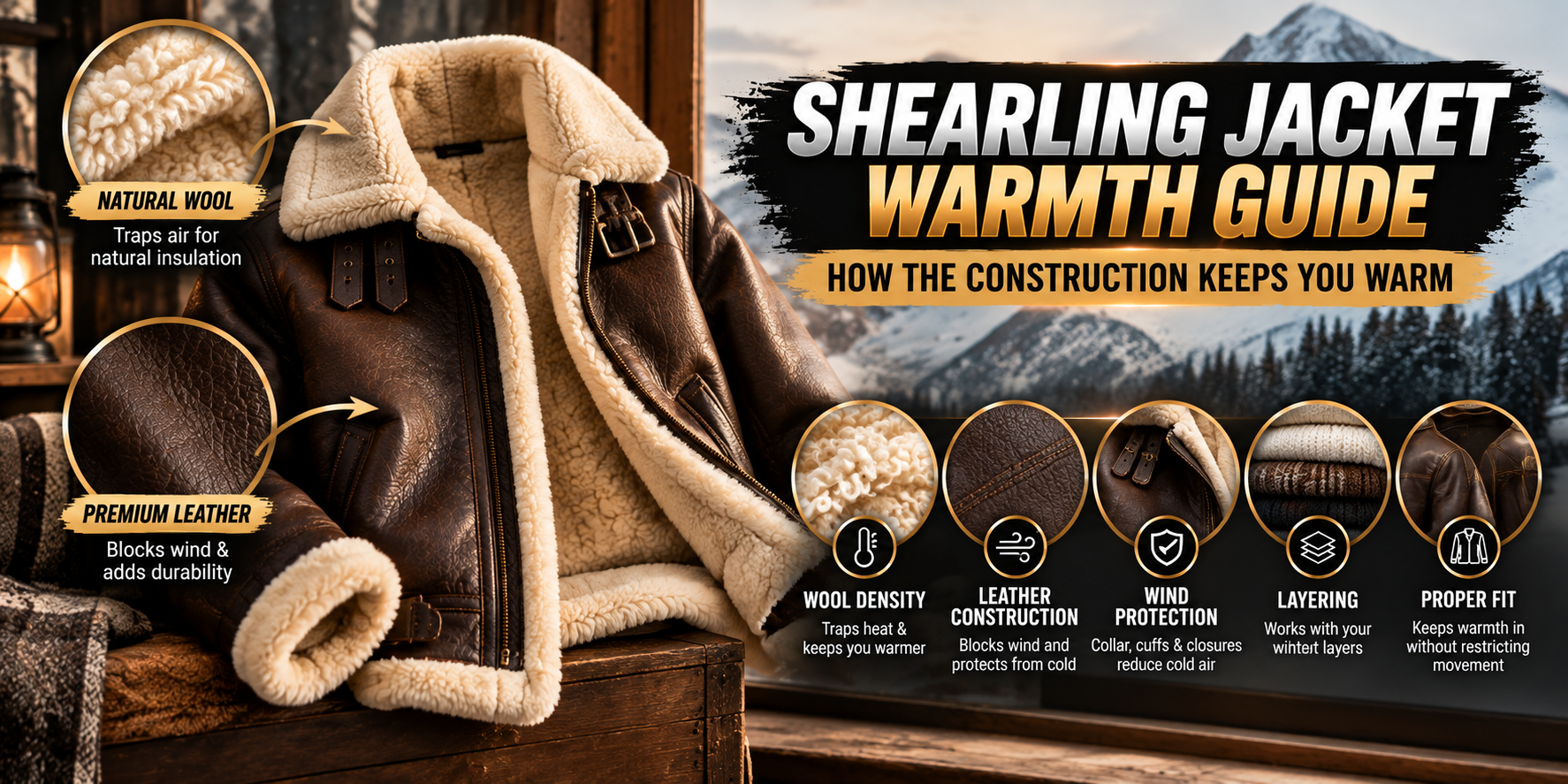
Shearling Jacket Warmth Guide
Discover how wool density, leather construction, wind protection, layering and fit work together to determine how warm a shearling jacket feels in real winter conditions.
What Actually Makes a Shearling Jacket Warm?
A warm shearling jacket is not defined by one material specification alone. Its performance comes from the way the wool, leather, fit and construction work together.
Retained wool or shearling fleece helps trap air close to the body, while the leather side creates an outer barrier against wind and everyday exposure.
Wool density, leather thickness, collar construction, closures, sleeve openings and available layering space can all influence how effectively a jacket protects you from cold.
Climate matters too. A jacket designed for a cold urban winter may feel very different from a heavy shearling jacket intended for prolonged exposure to freezing temperatures.
Three Main Parts of the Warmth System
Wool or Fleece
Dense fleece creates a layer of trapped air close to the body and contributes to the jacket’s insulation.
Leather Exterior
The leather outer forms a protective shell and can help reduce exposure to wind and light external moisture.
Garment Fit
Correct fit creates useful space for layering without allowing excessive openings around the body.
Why Wool Density Matters
More Than Just a Soft Interior
The wool side of a shearling construction is not simply decorative. Its fiber density and structure influence how much air can be retained within the fleece.
A denser, well-constructed fleece can contribute to a warmer feel, while a thinner or less dense lining provides a different level of insulation.
This is why two jackets described with similar material terminology can still feel noticeably different when worn.
What Does the Leather Side Do?
The leather exterior gives a shearling jacket its structural outer layer. It also creates a barrier between the insulation and the outside environment.
The leather side can help limit wind penetration and protect the garment from everyday contact and light environmental exposure.
Warmth Is a System, Not a Single Material
A thick leather exterior does not automatically make a jacket warmer. The insulation beneath it, the construction of the seams and closures, and the way the jacket fits all contribute to the final result.
The most useful way to evaluate a winter jacket is therefore to look at the complete construction rather than focusing on leather thickness alone.
Why Wind Protection Changes How Warm a Jacket Feels
Even a well-insulated jacket can feel less effective if cold air enters through open areas around the collar, cuffs, zipper or hem.
Shearling designs can use high collars, secure closures and fitted cuffs to reduce exposed openings. These details are particularly useful when the jacket is worn outdoors in windy conditions.
A strong winter design therefore combines insulation with effective protection against moving air.
How Layering Affects Shearling Jacket Warmth
Layering can improve comfort in changing temperatures, but the jacket needs enough room to accommodate the clothing underneath without restricting movement.
Useful when the jacket already provides substantial insulation and the weather is cold but manageable.
Adds another insulating layer for colder conditions while preserving flexibility.
Requires additional chest, shoulder and sleeve room. A tight jacket can restrict mobility when heavily layered.
Excessive layering can compress the insulating structure and make the garment uncomfortable rather than warmer.
Can the Fit of a Shearling Jacket Affect Warmth?
Yes. Fit influences both comfort and the amount of space available for layering. A jacket that is excessively tight can restrict movement and make winter layering difficult.
On the other hand, excessive looseness can create larger openings through which cold air can enter.
Shoulders
Shoulder seams should sit in an appropriate position without restricting arm movement.
Chest
Allow enough room for the layers you realistically plan to wear underneath.
Sleeves
Sleeves should provide coverage without becoming so long that they interfere with normal movement.
Collar
A well-fitting collar can reduce the amount of exposed space around the neck in windy conditions.
Hem
A stable hem helps keep the jacket positioned correctly when walking, sitting or moving outdoors.
Mobility
You should be able to move your arms naturally without excessive tension across the back or shoulders.
How Warm Is a Shearling Jacket for Different Conditions?
There is no single temperature rating that applies to every shearling jacket. Warmth depends on construction, insulation density, wind conditions, fit and what you wear underneath.
| Condition | Useful Construction | Layering Approach |
|---|---|---|
| Mild Winter | Lighter shearling or less bulky construction | T-shirt or light base layer |
| Cold Winter | Dense wool with good leather coverage | Thermal or medium-weight sweater |
| Windy Conditions | Secure collar, cuffs and front closure | Base layer plus suitable mid layer |
| Very Cold Conditions | Heavy insulation and substantial coverage | Proper thermal layering and cold-weather accessories |
Why B-3 and Aviator Styles Feel Particularly Warm
Traditional B-3 and aviator-inspired silhouettes are strongly associated with cold-weather construction because they often combine substantial insulation with extended collars and protective outer materials.
A deep collar can be positioned around the neck, while the shearling interior provides insulation across the torso. Construction details around the cuffs and front closure can further reduce exposed openings.
Coverage Matters
A winter jacket protects more than the center of your torso. Neck, wrists, front closure and lower hem all influence how effectively the garment manages cold air.
What to Check Before Buying a Warm Shearling Jacket
Check the density and construction of the wool or fleece.
Check how the leather exterior is finished and constructed.
Look at collar, cuff, hem and front-closure coverage.
Choose enough room for your normal winter layering.
Consider the climate and wind conditions where you will actually wear the jacket.
Check shoulder, chest and sleeve mobility before deciding on the final size.
Shearling Jacket Warmth FAQs
Are shearling jackets warm enough for winter?
What makes a shearling jacket warm?
Does thicker leather always mean a warmer jacket?
Can I wear a sweater under a shearling jacket?
Does a tight shearling jacket feel warmer?
Why is wind protection important in a winter jacket?
Is a B-3 shearling jacket suitable for cold weather?
How should I choose a shearling jacket for my climate?
Warmth Comes From the Whole Construction
A shearling jacket’s warmth is the result of several elements working together: wool density, leather construction, wind protection, fit and layering.
When choosing one, look beyond the material label and examine how the jacket is actually constructed and how that construction matches your climate and everyday use.