


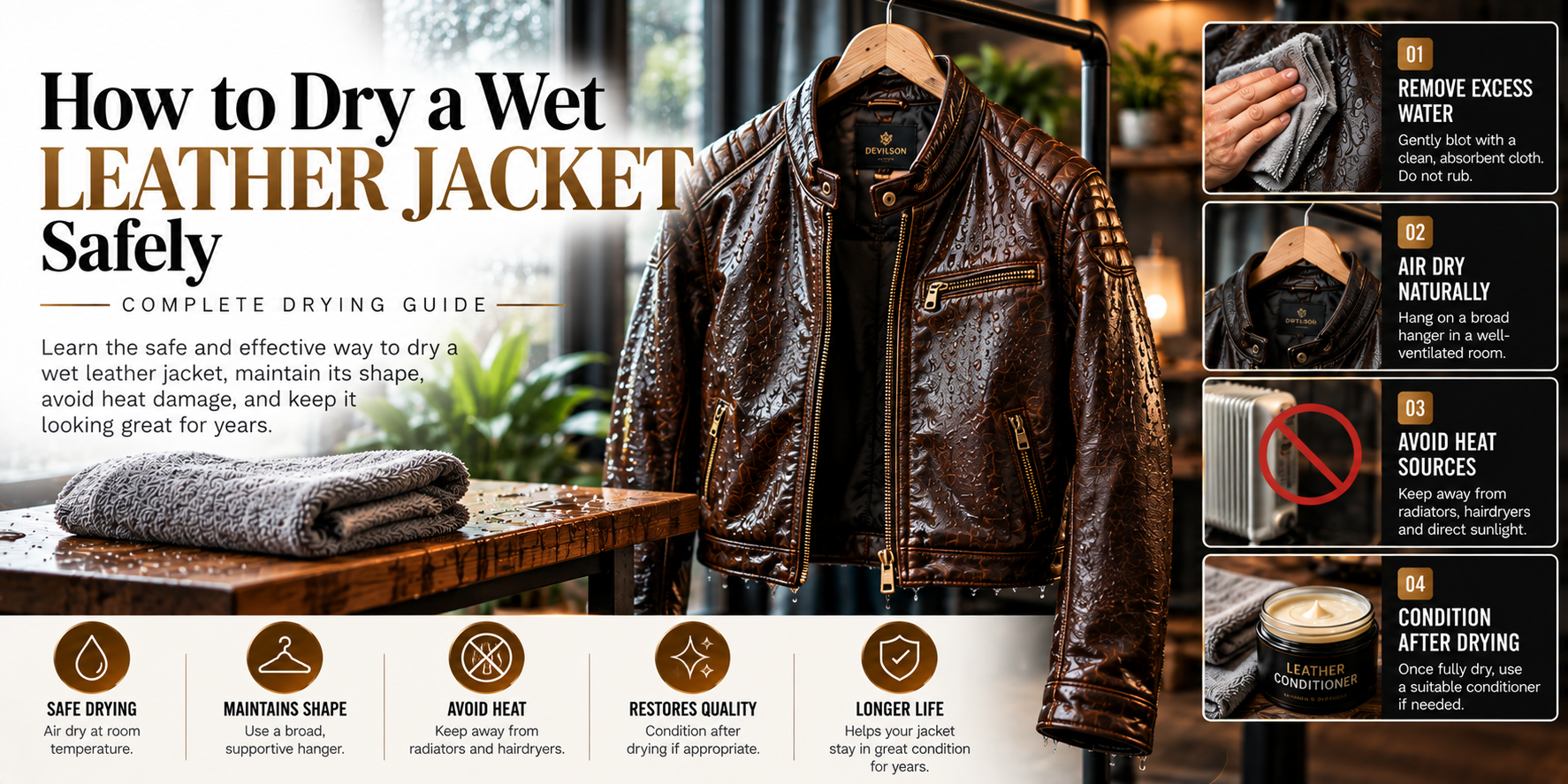
How to Dry a Wet Leather Jacket Safely
Learn what to do when rain, spills or moisture leave your leather jacket wet — and how to dry it without unnecessarily damaging the leather or changing its shape.
What Should You Do When a Leather Jacket Gets Wet?
The safest approach is usually controlled air drying at room temperature. The goal is to remove moisture gradually while helping the leather retain its shape.
Whether the jacket became wet from rain, a spill or another source of moisture, avoid trying to force the drying process. Leather can respond poorly to concentrated heat and rapid drying.
Start by gently removing excess surface moisture and then allow the jacket to dry naturally in an appropriate environment.
What to Do Immediately After Your Jacket Gets Wet
Remove Excess Water
Gently blot visible moisture with a clean, absorbent cloth. Avoid aggressive rubbing that could spread dirt or affect the surface.
Empty the Pockets
Remove objects from the pockets so unnecessary weight does not pull on wet leather while the jacket is drying.
Restore Its Shape
Gently arrange the jacket into its normal shape before leaving it to dry.
Move It Away From Heat
Keep the jacket away from radiators, heaters, hairdryers and other concentrated heat sources.
How to Air-Dry a Leather Jacket
Air drying allows moisture to leave the leather gradually. Choose a clean, ventilated indoor location away from direct sunlight and concentrated heat.
Use a Suitable Hanger
Hang the jacket on a broad, supportive hanger that helps maintain the shoulder shape while the leather is drying.
Choose Good Airflow
Place the jacket somewhere with normal room ventilation. Avoid enclosing it in a tight space while it is still wet.
Let Moisture Leave Naturally
Give the jacket sufficient time to dry naturally rather than repeatedly applying heat to speed up the process.
Check the Whole Jacket
Before storing or wearing it normally, make sure the lining, seams and other areas are no longer damp.
How to Keep a Wet Leather Jacket From Losing Its Shape
Water can temporarily change the way leather hangs and feels. Supporting the jacket correctly while it dries can help preserve its intended structure.
Broad Hanger
Use a broad, supportive hanger rather than allowing wet leather to hang from a narrow point.
Normal Position
Keep sleeves, collar and body arranged approximately as they would sit when the jacket is worn.
Avoid Heavy Loads
Empty pockets and avoid placing heavy objects on the jacket while the leather is wet.
Why You Should Not Dry Leather With Direct Heat
Avoid Radiators, Hairdryers & Strong Heat
Rapid or concentrated heating can cause leather to dry too aggressively. It may affect the material’s feel, flexibility, finish or shape. For that reason, controlled room-temperature air drying is generally the safer approach.
Hairdryer
Avoid directing a hairdryer at wet leather to accelerate drying.
Radiator
Do not place a wet leather jacket directly against a radiator or heater.
Space Heater
Avoid positioning the jacket close to concentrated hot airflow.
Direct Sunlight
Avoid using strong direct sunlight as a shortcut for drying the jacket.
What Not to Do When Leather Gets Wet
Safer Drying Practices
- Gently blot excess surface moisture.
- Hang the jacket on a broad supportive hanger.
- Allow normal room-temperature air drying.
- Keep the jacket away from concentrated heat.
- Restore the jacket’s natural shape while drying.
- Follow the manufacturer’s care instructions.
Avoid These Shortcuts
- Do not put the jacket directly on a radiator.
- Do not use a hairdryer to force rapid drying.
- Do not place wet leather against a space heater.
- Do not aggressively wring or twist the jacket.
- Do not store it while areas are still damp.
- Do not apply random products before checking the care instructions.
Should You Condition a Leather Jacket After It Gets Wet?
After the jacket has completely dried, inspect the leather before deciding whether conditioning is appropriate. Conditioning should be based on the leather type, its condition and the manufacturer’s care instructions.
Check the Surface
Look at the leather once it is fully dry. Check for changes in feel, appearance or flexibility before applying any care product.
Follow Leather-Specific Guidance
If conditioning is appropriate for the leather, choose a suitable product and follow the manufacturer’s application instructions.
Patch Test First
When using a product, test it in an inconspicuous area before treating the visible surface.
Avoid Over-Treating
More product is not automatically better. Use only an appropriate amount according to the product instructions.
When Does a Wet Leather Jacket Need Professional Restoration?
Minor exposure to rain or a small amount of water does not necessarily require professional treatment. However, more serious moisture damage may justify an expert assessment.
Consider Professional Assessment When:
- The jacket has been heavily saturated.
- The leather develops significant surface changes after drying.
- The jacket loses its expected shape.
- There are persistent stains or marks that do not respond to appropriate care.
- The leather becomes unusually stiff or damaged.
- The jacket has sentimental, vintage or otherwise valuable construction where experimentation could create unnecessary risk.
Wet Leather Jacket Drying Checklist
Gently blot the outside of the jacket rather than rubbing aggressively.
Remove unnecessary weight while the jacket is wet.
Support the shoulders and preserve the jacket’s shape.
Allow the jacket to dry at normal room temperature with suitable ventilation.
Keep the jacket away from radiators, hairdryers and strong heat sources.
Once completely dry, check the leather and follow its specific care instructions.
Let Leather Dry Slowly and Naturally
When a leather jacket gets wet, the safest response is usually simple: remove excess moisture, restore its shape, keep it away from direct heat and let it air dry naturally. Once completely dry, inspect the leather and follow the appropriate care instructions before applying any conditioner or other product.