


Leather Jacket Sleeve Length Guide
Learn where leather jacket sleeves should end, how to measure sleeve length correctly, and how wrist position, riding posture, cuffs and layering affect the final fit.
Where Should a Leather Jacket Sleeve End?
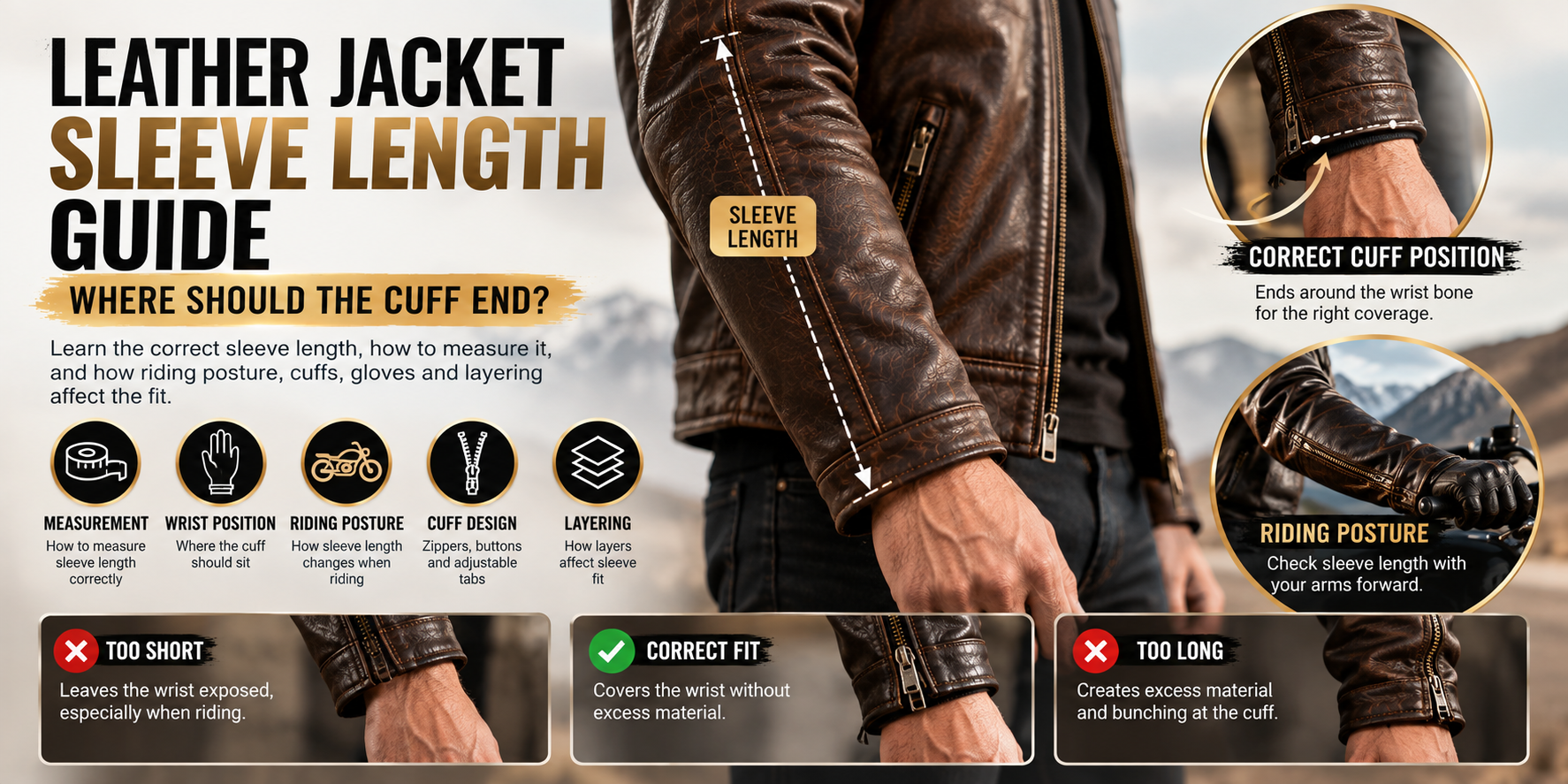
A leather jacket sleeve should provide useful wrist coverage without creating unnecessary excess material at the cuff. The correct position also depends on the jacket’s purpose, your posture and how you plan to wear it.
Sleeve length becomes especially important on a motorcycle jacket because your arms do not remain in the same position while riding. A sleeve that appears correct while standing can behave differently when your arms move forward.
For a reliable starting point, measure from the shoulder point to the wrist bone with your arm slightly bent, then compare that measurement with the product’s size chart.
Understanding the Correct Cuff Position
Wrist Coverage
The sleeve should provide appropriate coverage around the wrist rather than stopping noticeably high above it.
Avoid Excess Length
Excessive sleeve length can create unnecessary bunching around the wrist and cuff area.
Check Movement
Do not judge sleeve length only with your arms hanging naturally. Check how the sleeve behaves when you move.
How to Measure Leather Jacket Sleeve Length
Use a flexible measuring tape and keep your posture natural. The measurement should be taken consistently so it can be compared with the jacket’s own size chart.
Follow These Steps
Identify the point where the shoulder and sleeve meet.
A natural slight bend helps account for normal arm positioning rather than measuring with the arm rigid.
Run the tape from the shoulder point down toward the wrist bone.
Use your measurement together with the manufacturer’s specific sleeve measurement before selecting a size.
Why Riding Posture Changes Sleeve Fit
Motorcycle jackets need to be evaluated differently from jackets worn only while standing. When riding, the arms move forward and the elbows remain flexed.
Check the Sleeve in the Position You Actually Use
A sleeve should be assessed with your intended riding posture in mind. If the sleeve pulls noticeably upward when the arms move forward, the effective wrist coverage can change.
This is why sleeve length should be considered together with shoulder position, arm movement and cuff construction.
Standing Fit vs. Riding Fit
| Position | What to Check | Why It Matters |
|---|---|---|
| Standing | Cuff position around the wrist. | Gives you a baseline for sleeve length. |
| Arms Forward | Sleeve movement and wrist coverage. | Shows how the sleeve behaves during riding posture. |
| Elbows Bent | Pulling or tension around the forearm and elbow. | Helps identify whether the sleeve allows natural movement. |
| With Gloves | Relationship between cuff opening and glove coverage. | Helps avoid unnecessary gaps or excessive material. |
Sleeve Opening and Cuff Design Matter Too
Sleeve length is only part of the equation. The opening at the wrist can affect how the sleeve sits and how it interacts with gloves or additional layers.
Zippered Cuffs
A zipper can change the effective opening of the sleeve and influence how closely the cuff sits around the wrist.
Buttoned Cuffs
Adjustable button positions can provide some control over the sleeve opening.
Adjustable Tabs
A cuff tab can help control excess opening and change the way the sleeve sits around the wrist.
Glove Compatibility
Consider how your riding gloves overlap or sit with the jacket cuff rather than assessing the sleeve alone.
How Layering Affects Sleeve Length
The clothing worn underneath a leather jacket can influence how the sleeve feels around the wrist and forearm.
T-Shirt
A lightweight base layer requires less additional sleeve volume underneath the jacket.
Sweater
A thicker layer can occupy more space around the arm and change how the jacket sleeve sits.
Winter Layer
Heavier layering should be considered before choosing the jacket size and sleeve fit.
How to Tell If the Sleeves Are Too Long or Too Short
Insufficient Wrist Coverage
If the sleeve stops noticeably high above the wrist and loses coverage when your arms move forward, the sleeve may be too short.
Excessive Cuff Material
Excessive material around the wrist can create bunching and interfere with the clean silhouette of the sleeve.
Leather Jacket Sleeve-Length Mistakes to Avoid
Measuring sleeve length with the arm completely straight and rigid.
Judging the sleeve only while standing and ignoring intended riding posture.
Checking sleeve length without considering the cuff opening and construction.
Forgetting to consider gloves or layers worn underneath.
Choosing a jacket based only on the sleeve measurement without checking shoulder fit.
Sleeve Length Is About More Than the Cuff
Start with an accurate shoulder-to-wrist measurement, then consider wrist coverage, riding posture, cuff construction and your normal layering. Finally, compare the measurement with the specific jacket’s size chart.